Eddy County, New Mexico Mineral Rights: Why Location Inside the County Changes the Value
MINERAL RIGHTS & ROYALTIES
What could your mineral rights be worth?
Tell us a little about your interest. Get a free, no-obligation review from Selling My Mineral Rights.
Most people who call us about Eddy County want a number. They have a deed, a royalty check, or a probate file, and they want to know what the interest is worth. The honest answer is that Eddy County has no going rate, and anyone who quotes one without asking where the tract sits is guessing. This county holds three genuinely different oil and gas economies inside one set of lines, plus a federal overlay that exists almost nowhere else. Which one your acreage falls into changes the shape of the math.
Three rock stories under one county line
The southern and eastern county is deep Delaware Basin, the acreage people picture when they hear “Permian.” The targets are the Bone Spring and the Wolfcamp, both stacked rather than single. The EIA’s geology review of the Wolfcamp and Bone Spring shale plays describes the Bone Spring as alternating carbonate and sandstone intervals and splits it into the Avalon, First, Second and Third Bone Spring. Below that, the USGS mapped the Wolfcamp A, B, C and D tops separately in its structure contour and isopach report on the Delaware Basin, using a type log from southeast Eddy County as its reference. A tract down there may be drilled five or six times over a decade, each into a different bench.
The northern part of the county, around Artesia, is Northwest Shelf, and it is a different business. The productive intervals are the Seven Rivers, Queen, Grayburg and San Andres, and they are shallow. EON Resources describes its Grayburg-Jackson field here as 13,700 contiguous leasehold acres across 20 federal and 3 state leases, with pay from roughly 1,500 to 4,000 feet and a Seven Rivers waterflood running 342 producers against 207 injectors. These are stratigraphic traps formed where evaporites plugged porosity updip, and many have produced since before the Second World War.
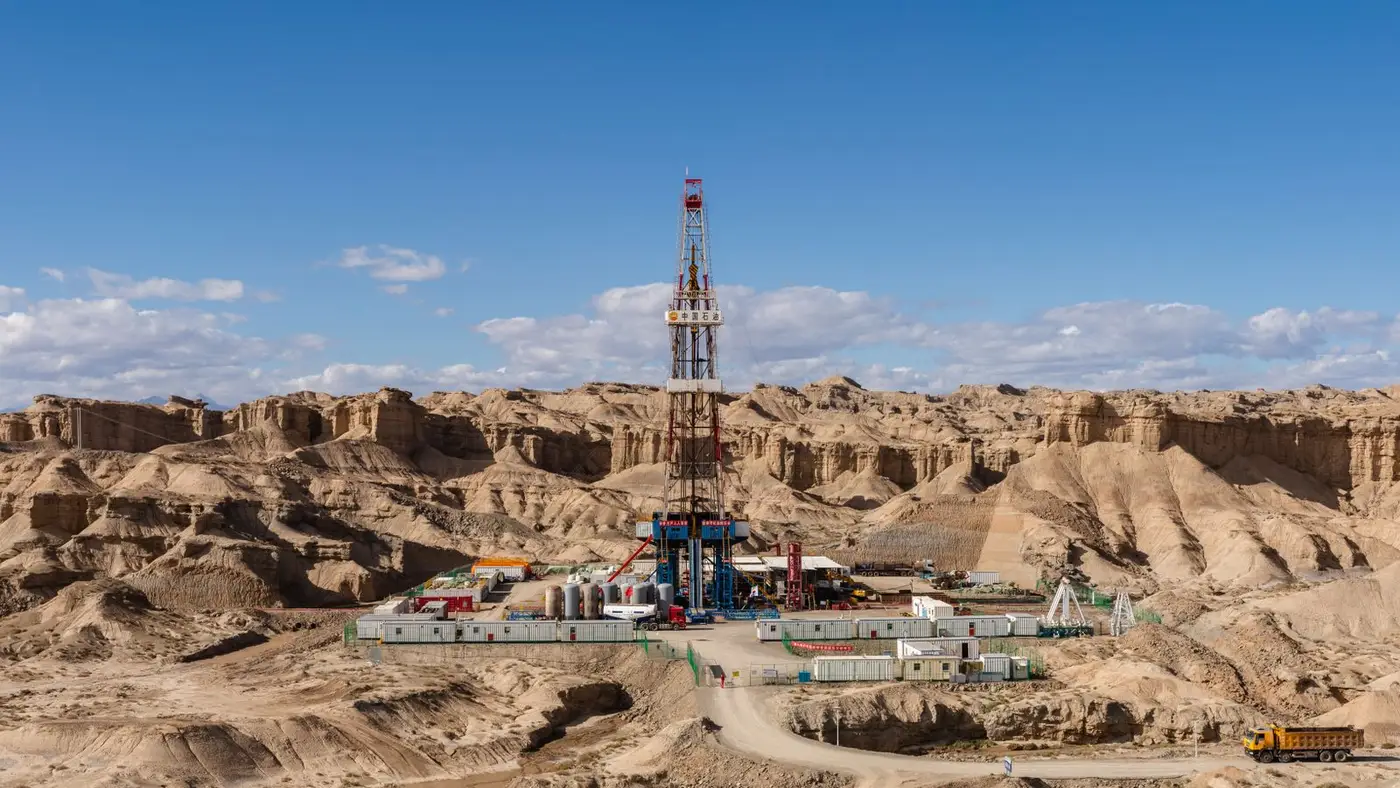
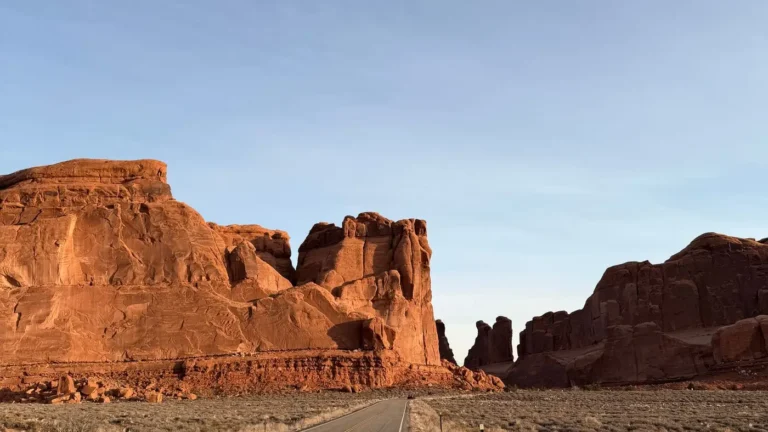
Then there is the western edge. The Guadalupe Mountains and the Capitan reef front run up the west side of the county, and the Delaware section thins against them. Southwest of Carlsbad you are into the Gypsum Plain, where Castile evaporite karst makes drilling and disposal genuinely difficult; Carlsbad Cavern is dissolved out of that same reef. Minerals out there are usually held rather than valued, and a buyer quoting a serious price for them is either seeing something specific or is not being careful.
The potash rule that follows the land, not the lease
Southeastern Eddy County sits partly inside the Designated Potash Area, the overlay most owners have never heard of. The BLM’s potash program page puts the DPA at 497,630 acres, of which 350,617 are BLM-managed surface. It is governed by Secretary’s Order 3324, signed December 3, 2012, which replaced the order that had governed the area since the 1980s.
The order constrains where a rig can physically sit. BLM establishes Development Areas inside the DPA, and new wells newly penetrating the potash-bearing formations must be drilled from Drilling Islands within them, typically one island per Development Area. The point is to keep roads, power lines and surface facilities off the potash and away from the miners working beneath.
For a mineral owner the effect is timing, not title. Nobody is taking your minerals. But if your tract can only be reached from a drilling island miles away, development waits on the operator assembling enough contiguous acreage to justify that island, and your interest may sit undrilled for years beside acreage already producing. Buyers price that delay. The same rules reach into western Lea County, so an owner comparing offers on both sides of the line should read a Lea County mineral rights valuation with the drilling-island question in mind rather than assuming the gap is all rock quality.
Why shelf barrels and basin barrels are valued differently
A modern Bone Spring or Wolfcamp horizontal comes on hard and falls off hard. Much of what it will ever produce arrives in the first two years, after which the curve flattens into a long, thin tail. Discount that profile and nearly all the present value sits in the near term, so the price is highly sensitive to the current strip and to whether more benches are realistically coming.
A Seven Rivers or Grayburg waterflood interest behaves almost the opposite way. The check is smaller, but it has often been about the same size for years, and the decline is shallow. Value there turns less on next year’s price deck and more on operating cost, because a shallow waterflood is the first thing shut in when prices drop. Two owners with identical net mineral acres, one north of Artesia and one southeast of Loving, hold different risk entirely, so a multiple quoted on one will not transfer to the other. Be wary of any offer applying a single multiple across an Eddy County package.
Running your own decimal before anyone quotes you
You can sanity-check almost any offer on paper. Say you own 40 net mineral acres inside a 1,280-acre horizontal unit under a 20 percent royalty. Tract participation is 40 divided by 1,280, or 0.03125; multiplied by the 0.20 royalty, your decimal is 0.00625. If the unit sells $1,500,000 of oil in a month, your gross royalty is $9,375.
From there, New Mexico production taxes come off: severance at 3.75 percent, emergency school tax at 3.15 percent on oil and 4 percent on gas, and conservation tax at 0.19 percent, rising to 0.24 percent when average WTI exceeds $70 per barrel. Together those land near 7 to 8 percent of taxable value before county ad valorem tax. At roughly 7.5 percent, that $9,375 becomes about $8,672 before ad valorem and before any deductions your lease allows. Run that on your own statement first; if it does not reconcile, the culprit is usually the unit size or the royalty rate.
Two state rules sit alongside it. The Oil and Gas Proceeds Payment Act, NMSA 70-10-1, governs payment timing to interest owners. And Senate Bill 23, effective July 1, 2025, raised the maximum royalty the State Land Office may take on premium state acreage to 25 percent, which matters because much of Eddy County is state and federal rather than fee.

Where the paper actually lives
Deeds, mineral conveyances, leases and assignments are recorded with the Eddy County Clerk at 325 S. Main Street in Carlsbad, with a sub-office in Artesia. Well files, permits, completions and disposal applications sit with the Oil Conservation Division at EMNRD, which also administers the Delaware Basin seismic response protocol. That protocol can curtail or shut in saltwater disposal wells near earthquake swarms, and because deep Delaware wells make several barrels of water per barrel of oil, disposal capacity genuinely constrains development pace in the southern county.
A note on names: consolidation has moved faster than the records. Mewbourne, Devon, EOG, Matador, Chevron, Permian Resources and COG Operating all have Eddy County production, but COG is the old Concho entity inside ConocoPhillips, and Devon completed its merger with Coterra on May 7, 2026, so acreage that was Cimarex and then Coterra now reports up through Devon. If a division order arrives under a name you do not recognize, that is usually why. Confirm it rather than assuming an error.
When holding is the better answer
Selling tends to make sense when the interest is too small to be worth administering, when an estate must be split among heirs who want different things, when the acreage is unlikely to see a rig for years, or when you want certainty instead of a check that moves with the strip.
- Think hard before selling if your tract is in the deep basin and only one or two benches have been drilled. The undeveloped benches are real value, and the buyer is pricing them too.
- Be careful if your acreage sits inside the DPA and development is merely delayed rather than foreclosed. Delay is a discount, not a write-off.
- Get the offer in writing on exact net mineral acres, not gross, and confirm the legal description matches the clerk’s records.
- If you have never reconciled your decimal, do it before you negotiate. It is the cheapest leverage you have.
Values here are ranges, and the range depends on which side of the shelf margin you sit, how many benches remain, whether a drilling island serves your acreage, your royalty rate, and what the lease permits in deductions. Anyone who skips those questions and leads with a number is not valuing your minerals. They are testing whether you will take the first offer.
Getting a real number on your Eddy County interest
If you want an offer that reflects where your acreage actually sits, send the legal description and a recent check stub. We buy across the county and will say plainly when holding beats selling. Start on our Eddy County mineral rights page, read our broader guide if you want to sell New Mexico mineral rights anywhere in the state, or reach us through our contact page.
MINERAL RIGHTS & ROYALTIES
Ready to explore an offer for your mineral rights?
Tell us a little about your interest. Get a free, no-obligation review from Selling My Mineral Rights.