
Rio Blanco County, Colorado: Piceance Gas, Rangely Oil, and What Your Minerals Are Worth
MINERAL RIGHTS & ROYALTIES
What could your mineral rights be worth?
Tell us a little about your interest. Get a free, no-obligation review from Selling My Mineral Rights.
Two people can own minerals in Rio Blanco County, Colorado, live thirty miles apart, and get royalty checks that behave nothing alike. One barely moves from year to year. The other rises and falls with every winter gas price. What a Rio Blanco interest is worth depends less on the acreage in the deed than on which of the county’s two producing systems sits under it, how fast those wells decline, and a tax credit being recalculated for 2026.
Two producing systems, one county line
Most of Rio Blanco County sits over the Piceance Basin, where gas comes mainly from the Cretaceous Mesaverde Group — the Iles Formation and, above it, the Williams Fork, the primary target. The USGS describes Williams Fork sandstones as highly lenticular and so tight that production depends on fractures. That is why Piceance wells come in dense pad patterns: the rock does not drain far. The deeper Mancos Shale is a separate target, assessed in USGS Fact Sheet 2016-3030 at a mean 66.3 trillion cubic feet of technically recoverable gas.
The western end of the county is a different world. Rangely field, on the Douglas Creek arch near the Utah line, produces oil from the Permian-Pennsylvanian Weber Sandstone, has yielded well over 800 million barrels since the 1940s, and has run under a miscible carbon dioxide flood since 1986. Scout Energy Management has operated the Rangely Weber Sand Unit since taking over from Chevron on December 1, 2021. Own there and you hold a share of a seventy-year-old field on tertiary recovery.
Why Rangely is assessed at a lower rate than the gas next door
Colorado taxes production as real property at the county level. Under C.R.S. 39-7-102, primary production is valued for assessment at 87.5 percent of the selling price. Subsection (2), written to keep tired fields alive, values leaseholds employing secondary recovery, tertiary recovery, or recycling projects at 75 percent. A mature CO2 flood is squarely what that contemplates, so taxable value can turn on recovery method, not just the price the barrel fetched.
That matters for a reason people miss: the statute excludes only oil and gas delivered to a governmental agency as royalty. Private royalty is not carved out. Your share sits inside the county’s assessed value, and your share of the resulting ad valorem tax comes back netted out of your proceeds.
The severance tax return many Rio Blanco owners do not know is theirs
Here the royalty owner, not the operator, carries the severance tax filing. Producers withhold 1 percent of gross income disbursed to each interest owner and must send a DR 0021W by March 1. The owner files the DR 0021, and the Department of Revenue is blunt that the liability is not shifted onto another party. The rate is graduated on gross income: 2 percent under $25,000, 3 percent to $100,000, 4 percent to $300,000, 5 percent above that. One exception covers many small owners: no return is required if total gross withholding on your DR 0021W forms is under $250 and the producer withheld enough.
Two wrinkles hit this county hard. Colorado exempts stripper production — wells averaging less than 15 barrels of oil a day, or less than 90,000 cubic feet of gas. Legislative Council staff reported that in 2022 stripper wells were 71.2 percent of Colorado’s gas wells while supplying 13 percent of its gas, and an aging Piceance well base is where many sit. The catch: you cannot claim the ad valorem credit on exempt stripper production, so wells that escape the tax stop generating the offset.
The number that changes for tax year 2026
The ad valorem credit used to be simple: a percentage of property taxes assessed or paid on production — 87.5 percent through 2023, then 75 percent for 2024 and 2025. Beginning with tax year 2026, Legislative Council staff explain, C.R.S. 39-29-105(2)(c) replaces it with a formula: 65.625 percent of gross income, times the total mill levy for the preceding calendar year at the well’s location. For 2027 and after it rises to 76.56 percent.
The point is to cut a lag that ran up to two years. For an owner, the credit now keys off this year’s income and last year’s mill levy rather than a tax bill from two years back. If you have been estimating by rolling last year’s return forward, next spring’s will not match.
A flat decline curve changes how a buyer prices you
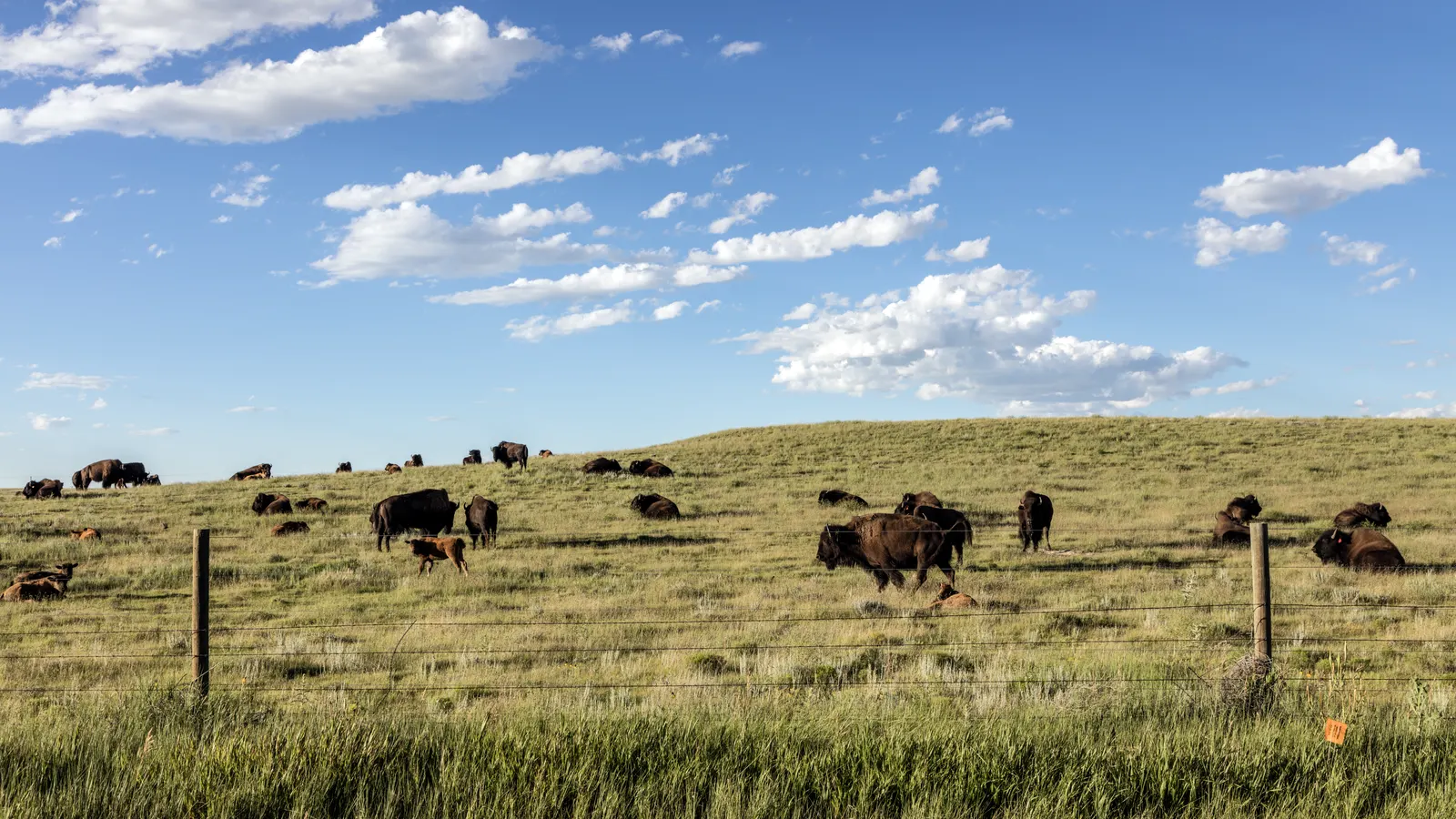
In a shale county, a buyer models a steep hyperbolic decline: a flush first year, a sharp fall, most of the present value collected early. Rio Blanco is the opposite problem. An old Williams Fork well, or a CO2-flood barrel at Rangely, has already done its declining. What remains is a long, shallow tail, and the value sits in how long it runs and what it costs to run.
That cuts both ways. A genuinely flat interest can support a higher multiple of current cash flow than a flush new well, because the income is predictable and nobody is betting on a curve. But a low-rate well is first to be shut in when margins compress — the stripper economics that exempt it from severance tax mean it runs near its floor. Reserve life, operating cost, and discount rate do more work here than any per-acre rule of thumb.
Know your decimal first. In an ordinary spacing unit it is net mineral acres divided by unit acres, times the royalty rate, times your share. At Rangely it is a unit participation factor set by the unit agreement, and deed acreage is only a starting point.
What the recent drilling swing did and did not prove
Rio Blanco became the busy end of the Piceance. Reporting Energy and Carbon Management Commission data in March 2025, The Daily Sentinel counted 72 well starts in the county during 2024, up from 14 a year earlier and the most since 2010. Garfield County, long the center of gravity, had 21, down from 91 — and the installed base differs as sharply, roughly 2,855 active wells against about 12,000. An owner weighing a Garfield County mineral rights interest holds an older, more thoroughly drilled version of the same Williams Fork section, which is why the two price differently in the same month.
What it does not prove is that a well is coming to your tract. Seventy-two starts across a county this size is a concentrated program, not a land rush, and the operators have changed hands: Terra Energy Holdings sold to a Flywheel Energy affiliate on April 7, 2025, though the wells still operate under the TEP Rocky Mountain name, and QB Energy took the former Caerus Piceance position in Quantum Capital Group’s $1.8 billion acquisition in August 2024. Records lag, so the name on your stub may not match the state file. Meanwhile the EIA’s October 2026 Short-Term Energy Outlook put the 2026 Henry Hub average at $3.48 per million Btu and forecast $3.16 for 2027 — a softer deck, not a collapsing one.
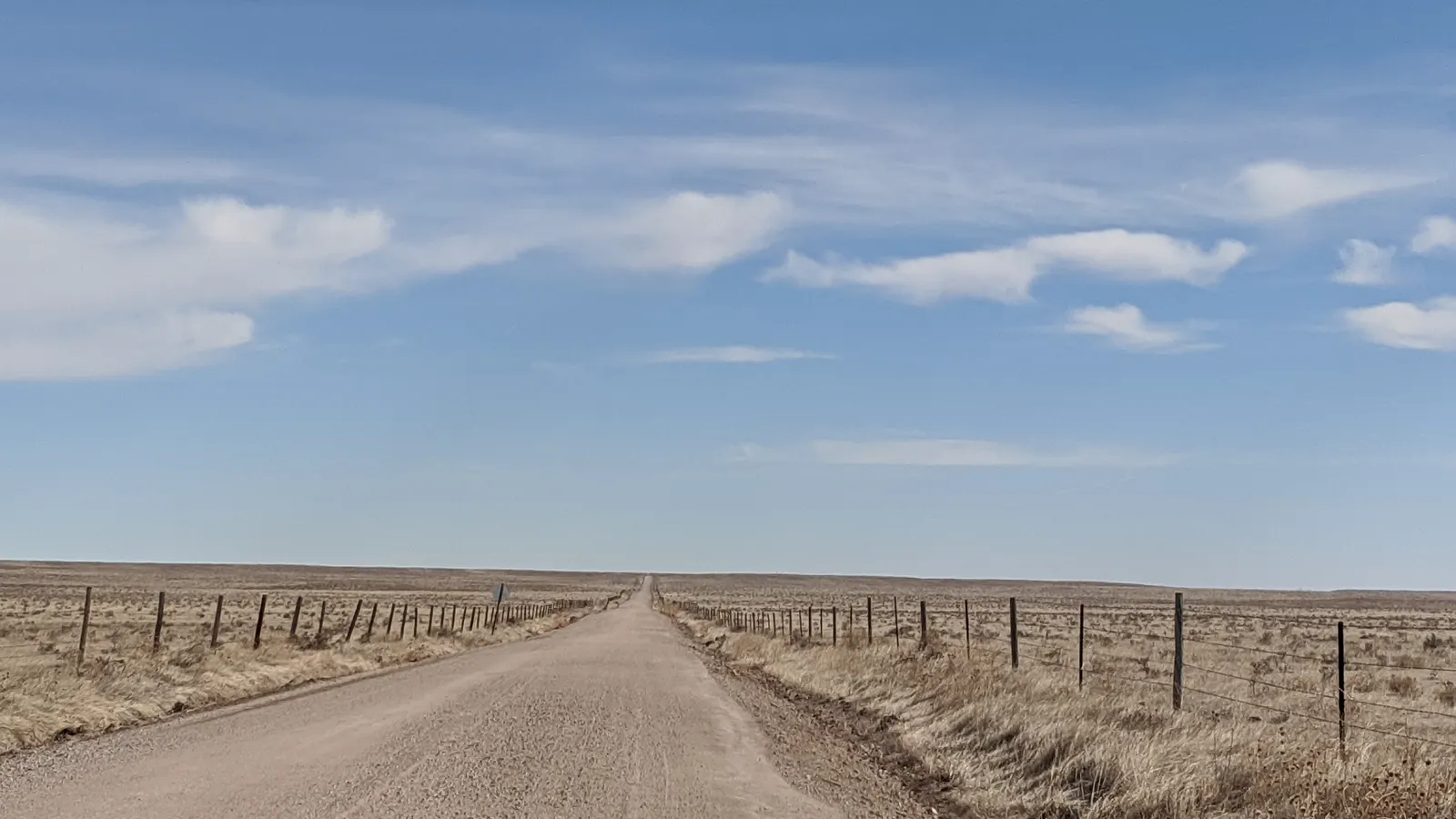
The contrast with the Front Range is instructive. A Weld County mineral rights owner usually values a young horizontal with steep decline ahead, so timing the sale against the curve is the conversation. In Rio Blanco the curve has flattened, and the question is duration and cost.
When selling makes sense here, and when it does not
Selling tends to make sense when the interest is small and scattered, when the income no longer justifies the compliance attached to it, or when an estate must be divided among heirs who do not all want to be in this business. A flat royalty is reasonable to convert to cash precisely because its future resembles its present. Cases where it is not:
- Your acreage sits beside an active development area and permits are being filed nearby.
- Your interest is unleased — an unleased owner has options a royalty owner does not, and those carry value.
- Title is unsettled. Colorado has no dormant mineral act, so a severed interest is not lost through non-use; the real dangers are unpaid property taxes on it and gaps in the chain after a death. Deeds, affidavits, and probate records are filed with the Rio Blanco County Clerk and Recorder in Meeker, which also keeps a Rangely office.
Anyone making an offer should show how they got there: which wells, what decline, what price deck, what discount rate. An offer that arrives as a single number with no reasoning is not a valuation. It is an opening bid.
Getting a number on your interest
To learn what your Rio Blanco County mineral rights are worth, send recent check stubs or a division order and the deed. That identifies the wells, the decimal, and whether you sit on the gas side of the county or the Rangely side — the distinction driving most of the answer. We buy producing and non-producing interests and explain the reasoning behind a number. If you own in several counties and want to sell Colorado mineral rights across them, or have a question about a statement, get in touch.
MINERAL RIGHTS & ROYALTIES
Ready to explore an offer for your mineral rights?
Tell us a little about your interest. Get a free, no-obligation review from Selling My Mineral Rights.