Four North Dakota Counties, Four Royalty Stories: Williams, Dunn, Divide and Stark
MINERAL RIGHTS & ROYALTIES
What could your mineral rights be worth?
Tell us a little about your interest. Get a free, no-obligation review from Selling My Mineral Rights.
Two North Dakota royalty owners can open their statements in the same month and see opposite trends. One, with acreage in Divide County, may be watching new wells get permitted a few miles away. Another, in Stark County, may be watching a check that gets a little smaller every year. Both own minerals in the Williston Basin, but they are in very different positions.
This post compares four counties using the state’s own numbers from the North Dakota Department of Mineral Resources: annual county production, the active rig list and the daily permit reports. If you are deciding whether to hold or sell North Dakota oil and gas royalties, the county trend is a useful place to start.
The Four Counties in One Place
North Dakota produced about 427 million barrels of oil in 2025. McKenzie, Dunn, Williams, Mountrail and Divide together produced about 96% of it. Here is how our four counties looked in 2025, plus drilling activity from the third quarter of 2026:
- Williams: 89.1 million barrels in 2025, up 8.3% from 2024. 8 rigs running on October 3, 2026, and 62 drilling permits approved from July 1 to October 2, 2026.
- Dunn: 91.9 million barrels in 2025, down 11.9%. 4 rigs and 26 permits.
- Divide: 14.7 million barrels in 2025, up 52.8%. 6 rigs and 53 permits.
- Stark: 1.2 million barrels in 2025, down 13.9%. No rigs and 3 permits.
Production figures come from the DMR’s historical oil production by county. Rig counts and permits come from the NDIC rig list and daily activity reports.
Williams County: Where It Started, Still Growing
North Dakota’s oil history begins in Williams County. Amerada Petroleum’s Clarence Iverson #1, completed on April 4, 1951 about eight miles south of Tioga, was the state’s first oil well and the discovery well of the Beaver Lodge field. The Bakken Formation itself is named for the H.O. Bakken #1, another Amerada well in Williams County.
Seventy-five years later, Williams is still growing. Its 2025 output was 98.5% of its 2019 record, and it was the only one of the four biggest producing counties to grow that year. By July 2026 it had passed Dunn to become the state’s second-largest producer. The operator list is broad. ExxonMobil’s XTO, Continental, Chord, Kraken (which took over Zavanna in March 2026), Chevron (through Hess) and Devon all have a meaningful share. Steady permitting across many operators usually means more buyers paying attention. Owners can see more on our Williams County mineral rights page.
Dunn County: Big Volumes, Past the Peak
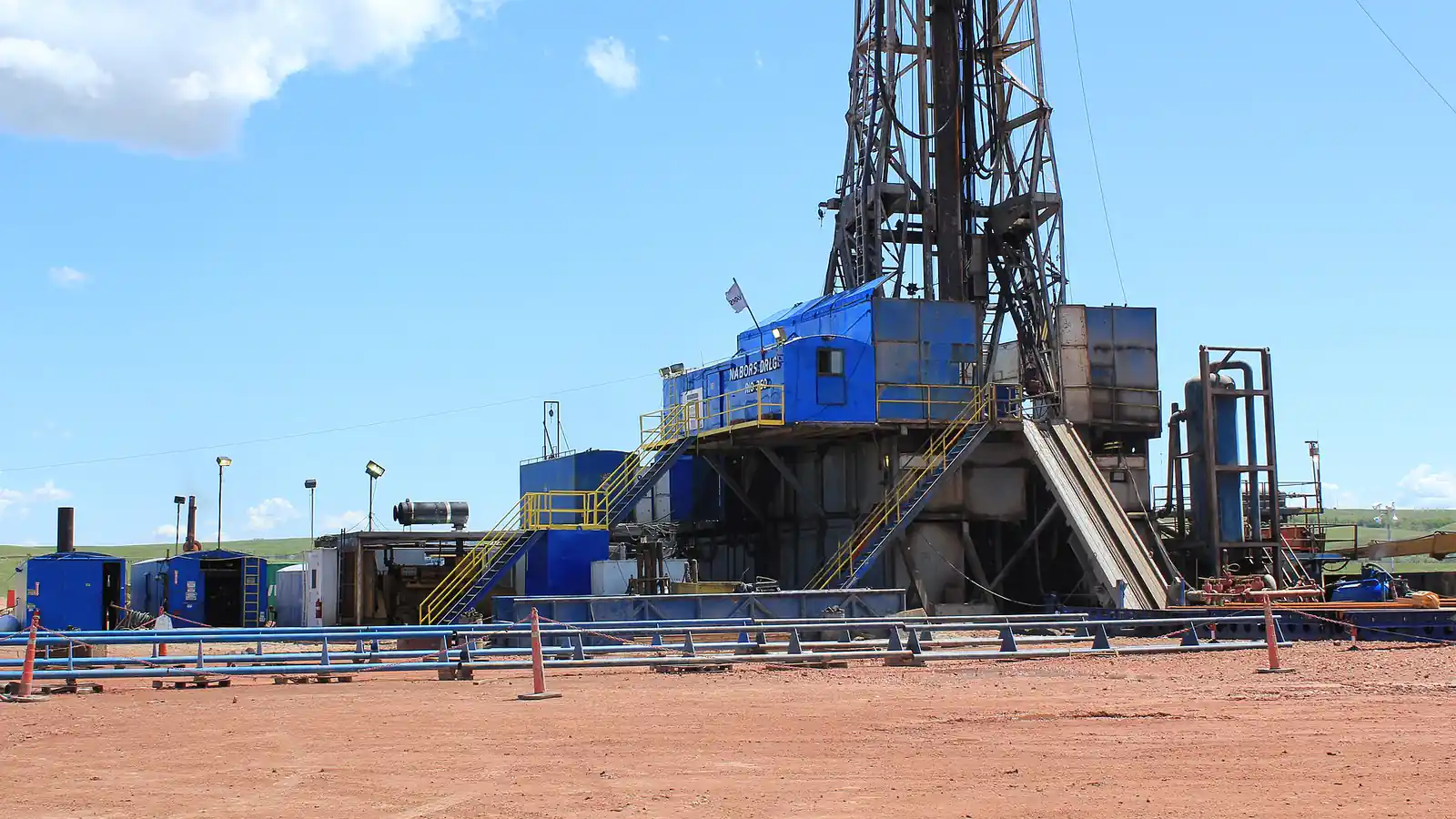
Dunn produced slightly more oil than Williams in 2025, but its trend runs the other way. Its record year was 2023 at 108.9 million barrels. Output fell to 91.9 million in 2025, and Williams moved ahead of it in 2026. ConocoPhillips is now the largest operator, through its Marathon Oil and Burlington Resources entities, followed by Chord and Continental.
Part of Dunn lies inside the Fort Berthold Reservation, where leases of trust minerals need federal approval. Dunn also produced a useful lesson about title. In Vic Christensen Mineral Trust v. Enerplus (2022), successor trusts disputed who owned a royalty created by a 1952 deed, and the court held that the operator was justified in suspending payments while title was in dispute. When ownership is unclear, payments can stop.
A county past its peak is not a bad place to own minerals. Producing wells keep paying for years. But a buyer will look at the decline curve, so an owner deciding whether to sell should know which way the line is moving. See our Dunn County page for the county’s fields, operators and records.
Divide County: The Fastest Riser
Divide is much smaller than the core counties, but it had the largest percentage gain in 2025 of the seven western North Dakota counties we cover. Oil was up 52.8% to 14.7 million barrels, within about 2% of its 2014 record. The operators are different too. In July 2026, Phoenix Operating, KODA Resources and Formentera Operations ran most of the county’s production. All three are newer private companies, not the large public names that dominate McKenzie or Dunn. On October 3, 2026, Divide had six rigs, more than Dunn. Its 53 permits for the quarter tied McKenzie.
Divide is also where one of the key abandoned-mineral cases came from. In Larson v. Norheim (2013), surface owners served a notice of lapse, but the heirs of the original mineral owners recorded a statement of claim that prevented the lapse, and they kept the minerals. Our post on North Dakota’s twenty-year abandoned mineral law explains how that process works, and our Divide County mineral rights page covers the county itself.
Stark County: A Different Kind of Field
Stark produced 1.2 million barrels in 2025. That is a fraction of its record year, 1999, when it produced 7.39 million barrels, a decade before the Bakken boom. It is the only one of these counties with a large non-Bakken share. About 23% of its July 2026 oil came from the Lodgepole formation, and the North Dakota Geological Survey describes the Lodgepole “Dickinson mounds” in Stark County. Stark ranks 10th in the state for oil but 8th for gas.
Chord, through its Whiting entity, operates about half of Stark’s production, and Scout Energy Management and Morningstar Operating run much of the rest. There were no rigs in the county on October 3, 2026, and only three permits in the quarter. Owners here usually hold older wells with a long, flat production history. Buyers value that differently from new-well potential. It is not worth less by default; it is a different kind of interest. More on our Stark County page.
What This Means for an Individual Owner
County trends are background, not a price. What a specific interest is worth depends on the tract: which wells are in its spacing unit, how old they are, the decimal interest on the check stub, the lease terms on deductions, and whether title is clean. Two owners in the same county can hold interests worth very different amounts.
A few North Dakota rules apply in every county. Royalties are due within 150 days after the oil or gas is sold, and late payments generally carry 18% interest unless title is in dispute. Oil is subject to a 5% gross production tax and a 5% extraction tax. Under leases that set royalty “at the well,” North Dakota courts have allowed post-production deductions. Check your lease language before comparing statements.
If you are thinking about selling your oil and gas royalty rights in any of these counties, we can review a check stub, deed or legal description and explain what drives the number. Start with the Williams, Dunn, Divide or Stark County pages. You can also read about how to sell mineral rights in North Dakota statewide, including McKenzie, Mountrail and Burke, or contact us directly.
Sources: North Dakota Department of Mineral Resources, ND Historical Barrels of Oil Produced by County (data through July 2026) and annual production totals; NDIC Monthly Production Report, July 2026; NDIC Current Active Drilling Rig List (October 3, 2026); NDIC Daily Activity Reports, July 1 to October 2, 2026; North Dakota Geological Survey, Geologic Investigations 59; Vic Christensen Mineral Trust v. Enerplus Resources (USA) Corp., 2022 ND 8; Larson v. Norheim, 2013 ND 60; N.D.C.C. 47-16-39.1. Operator parent companies as of October 2026. This article is general information, not legal or tax advice.
Photos: Acroterion / Wikimedia Commons, CC BY-SA 4.0; Lindsey G / Wikimedia Commons, CC BY 2.0; Masterhatch / Wikimedia Commons, CC BY-SA 4.0.
MINERAL RIGHTS & ROYALTIES
Ready to explore an offer for your mineral rights?
Tell us a little about your interest. Get a free, no-obligation review from Selling My Mineral Rights.