Unused for Twenty Years: How North Dakota’s Abandoned Mineral Law Works
MINERAL RIGHTS & ROYALTIES
What could your mineral rights be worth?
Tell us a little about your interest. Get a free, no-obligation review from Selling My Mineral Rights.
A cousin forwards a clipping from a small North Dakota weekly: a legal notice, three weeks running, naming your grandparents and a quarter section none of you has seen. Or a landman calls about acreage you assumed was worthless and asks whether you have ever recorded a statement of claim. Either way the question is the same. If nobody in the family has done anything with North Dakota minerals for decades, do you still own them?
The answer depends on a short statute, Chapter 38-18.1 of the North Dakota Century Code, and on what the county records show for the last twenty years. Unlike Texas, Oklahoma, Colorado or Wyoming, North Dakota does let an unused severed mineral interest pass to the surface owner. But the statute is mechanical, the surface owner has to follow it step by step, and the mineral owner gets a last chance to respond.
What the Statute Says
Under section 38-18.1-02, a mineral interest that has been “unused for a period of twenty years immediately preceding the first publication of the notice” is deemed abandoned unless a statement of claim has been recorded, and title vests in the owner of the surface. It covers oil, gas, coal, uranium and other minerals owned separately from the surface, but not minerals owned by government bodies, and it applies to interests created before the statute as well as after.
The twenty years are counted backward from the first publication of the surface owner’s notice, not from the date the interest was created. A mineral interest that sat untouched from 1960 to 2000 but was covered by a lease recorded in 2010 is not abandoned in 2026, because the clock looks only at the twenty years before notice.
What Counts as “Use”
Section 38-18.1-03 lists what keeps an interest alive. Any one of these within the twenty-year window is enough:
- Production of minerals under the interest.
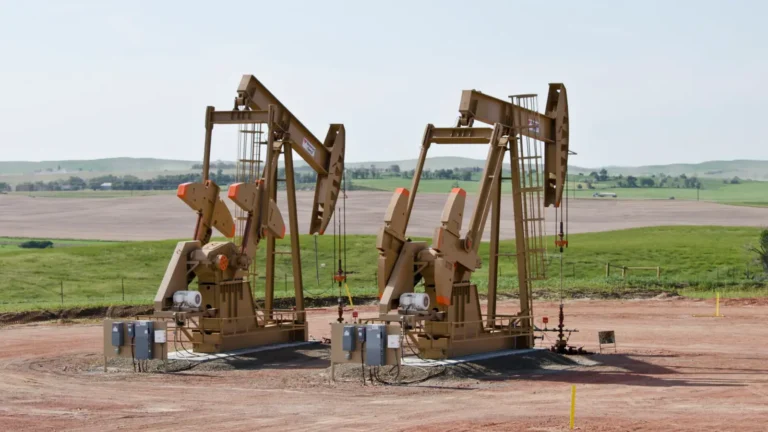
- Injection, storage or disposal operations.
- A recorded lease, mortgage, assignment or conveyance of the interest.
- A recorded pooling or unitization order or agreement covering it.
- A recorded statement of claim.
One thing that does not count is royalty paid into a suspense account because the operator cannot find the owner. That money is held for the owner and, after three years, becomes unclaimed property under Chapter 47-30.2, but the statute expressly says it is not “use” of the minerals. Heirs are sometimes surprised by this: a well can be producing under the tract, money can be accumulating in their family’s name, and the interest can still be vulnerable if nothing has been recorded.

In practice, minerals in the core of the Bakken have usually been leased, conveyed or covered by recorded instruments at some point since the Bakken boom began in the late 2000s. The interests most exposed are the ones nobody has touched in the county records: never leased, never sold, never probated in North Dakota, and owned by people who moved away generations ago.
What the Surface Owner Has to Do
The statute does not work automatically. Under section 38-18.1-06, a surface owner who wants the minerals must publish notice once a week for three weeks in the official county newspaper, then mail it within ten days after the last publication to the mineral owner, if an address is of record or can be found through “reasonable inquiry.” That inquiry must include the county recorder’s records, the clerk of court’s judgment, lien and probate records, the Social Security Death Index and at least one free public internet database. The notice and an affidavit of service are then recorded.
Since amendments in 2009, the surface owner must also bring a quiet title action in district court and prove that every step was followed. The North Dakota Supreme Court has enforced the mailing rule strictly. In Nelson v. McAlester Fuel Co. (2017), a Burke County case, the court held that notice had to be mailed to the most recent address of record; mailing it to the address on a 1958 deed was not enough.
The Sixty-Day Window
A mineral owner who learns of a notice still has time. Under section 38-18.1-05, the interest is preserved if, within sixty days after the first publication, the owner records a statement of claim or proof that the interest was used during the previous twenty years. Someone who is not yet the owner of record, such as an heir whose parent’s estate was never probated in North Dakota, can instead record a sworn affidavit explaining how they hold title.
Royalty interests raise a further question. In Yesel v. Brandon (2015), the court held that a non-participating royalty was not abandoned where the mineral interest it burdened had been leased, pooled and was producing, and it left open whether the statute reaches royalty interests at all. If your family owns a royalty rather than the minerals themselves, that distinction matters and is worth raising with a North Dakota attorney.
How to Protect an Interest You Own
- Record a statement of claim with the county recorder in each county where the minerals lie. It must give the owner’s name and address, a legal description and the type of interest. The Department of Mineral Resources provides a form on its mineral owner information page.
- Get the current owners into the record. If the interest passed through an estate that was never probated in North Dakota, an ancillary probate or other recorded proceeding puts the right names on title and gives future notices somewhere to go.
- Keep your address current on recorded instruments, since that is where a surface owner’s notice will be sent.
- Search the records yourself. Fifty of North Dakota’s 53 counties participate in the North Dakota Recorders Information Network, where recorded documents can be searched online for a modest fee.
What It Means if You Are Selling
Any careful buyer runs this history before making a firm offer. An interest with a recent lease or conveyance, or a statement of claim on record, is straightforward. An interest with nothing recorded for twenty years is still yours until a surface owner completes the process, but a buyer will want a claim recorded before closing, and an interest where notice has already been published needs an attorney’s attention first. None of this is legal advice, and a North Dakota mineral title attorney can confirm where your interest stands.
We buy North Dakota mineral and royalty interests, including inherited fractions owned by families who live out of state, and we check the abandonment history as part of every review. Owners in the core of the play can start on our McKenzie County page or Mountrail County page, and owners in Burke County, where the Nelson case arose, on our Burke County page. For the wider picture, including pooling, taxes and royalty timing, see how to sell North Dakota mineral rights, or get in touch with a deed, a statement or just a legal description.
Sources: North Dakota Century Code Chapter 38-18.1; North Dakota Department of Mineral Resources, mineral owner information; Nelson v. McAlester Fuel Co., 2017 ND 49; Yesel v. Brandon, 2015 ND 195; North Dakota Recorders Information Network.
Photos: U.S. Fish and Wildlife Service / Wikimedia Commons, public domain; Andrew Filer / Wikimedia Commons, CC BY-SA 2.0; Masterhatch / Wikimedia Commons, CC BY-SA 4.0.
MINERAL RIGHTS & ROYALTIES
Ready to explore an offer for your mineral rights?
Tell us a little about your interest. Get a free, no-obligation review from Selling My Mineral Rights.