
Old Shallow Leases and Deep Marcellus Rights in Butler County, Pennsylvania
MINERAL RIGHTS & ROYALTIES
What could your mineral rights be worth?
Tell us a little about your interest. Get a free, no-obligation review from Selling My Mineral Rights.
Most Pennsylvania mineral owners who go looking for trouble go looking in the deeds. In Butler County the more common problem is a lease. Tracts across the northern and eastern townships are still subject to leases signed in the 1920s, the 1950s or the 1970s, held open by a shallow well that pumps a few hundred dollars a year into somebody’s account. That lease may never have mentioned the Marcellus. It may still control it. Whether it does is usually the biggest single factor in what a Butler County interest is worth, and it is a question about paper, not geology.
Butler is two gas counties stacked on top of each other
The northern half of Butler County was one of the great oil districts of the nineteenth century. The fields around Petrolia, Karns City and Bruin were drilled hard in the 1870s and 1880s into the shallow Venango sands, a few hundred to about 1,500 feet down, and the drilling never entirely stopped. Shallow wells kept going in through the twentieth century, and the leases authorizing them kept being signed.
Thousands of feet below sits the second county. Butler lies in the liquids-rich part of the Marcellus fairway, where the gas carries enough ethane, propane and condensate to be worth more per unit than the dry methane of the Northern Tier. The county produced 252,440 barrels of condensate in 2025, almost all from unconventional wells, according to FracTracker’s analysis of Pennsylvania DEP production data. The Marcellus is thinner here than in the southwestern counties, which is part of why operators also target the Upper Devonian Burket a few hundred feet above it.
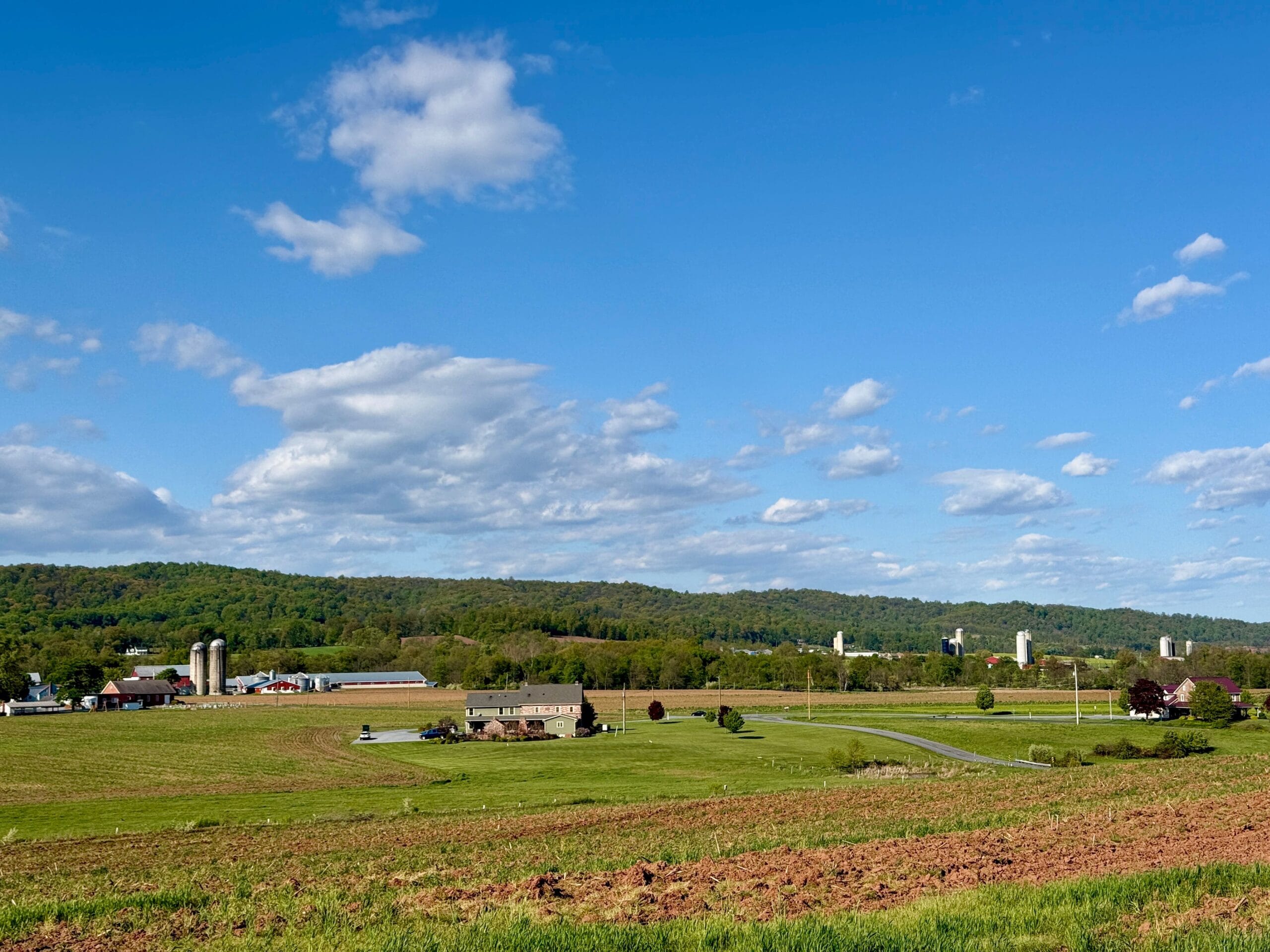
The operators reflect the split. PennEnergy Resources, a private Pittsburgh company focused on Armstrong, Butler and Beaver counties, has been the most active permit holder in Butler in recent years. Laurel Mountain Energy works Butler, Armstrong and Clarion, targeting the Marcellus, Upper Devonian and Utica. Alongside them sit dozens of small conventional operators, some of them one or two people with a truck.
The one-barrel-a-day well that holds everything
A standard oil and gas lease runs for a stated primary term and then “as long thereafter as oil or gas is produced in paying quantities.” That last clause, the habendum clause, is what turns a five-year lease into a hundred-year one. As long as the well keeps producing, the lease keeps living, and everything the lease covers stays covered.
The scale of this is easy to underestimate. Of Pennsylvania’s 79,836 conventional wells, about 61,070 — roughly 76 percent — produced one barrel of oil equivalent per day or less in 2025, and another 10,769 reported none at all. Only 82 in the entire state produced more than 15. These are not businesses in any ordinary sense. But a well making half a barrel a day is still, in the eyes of the lease, producing.
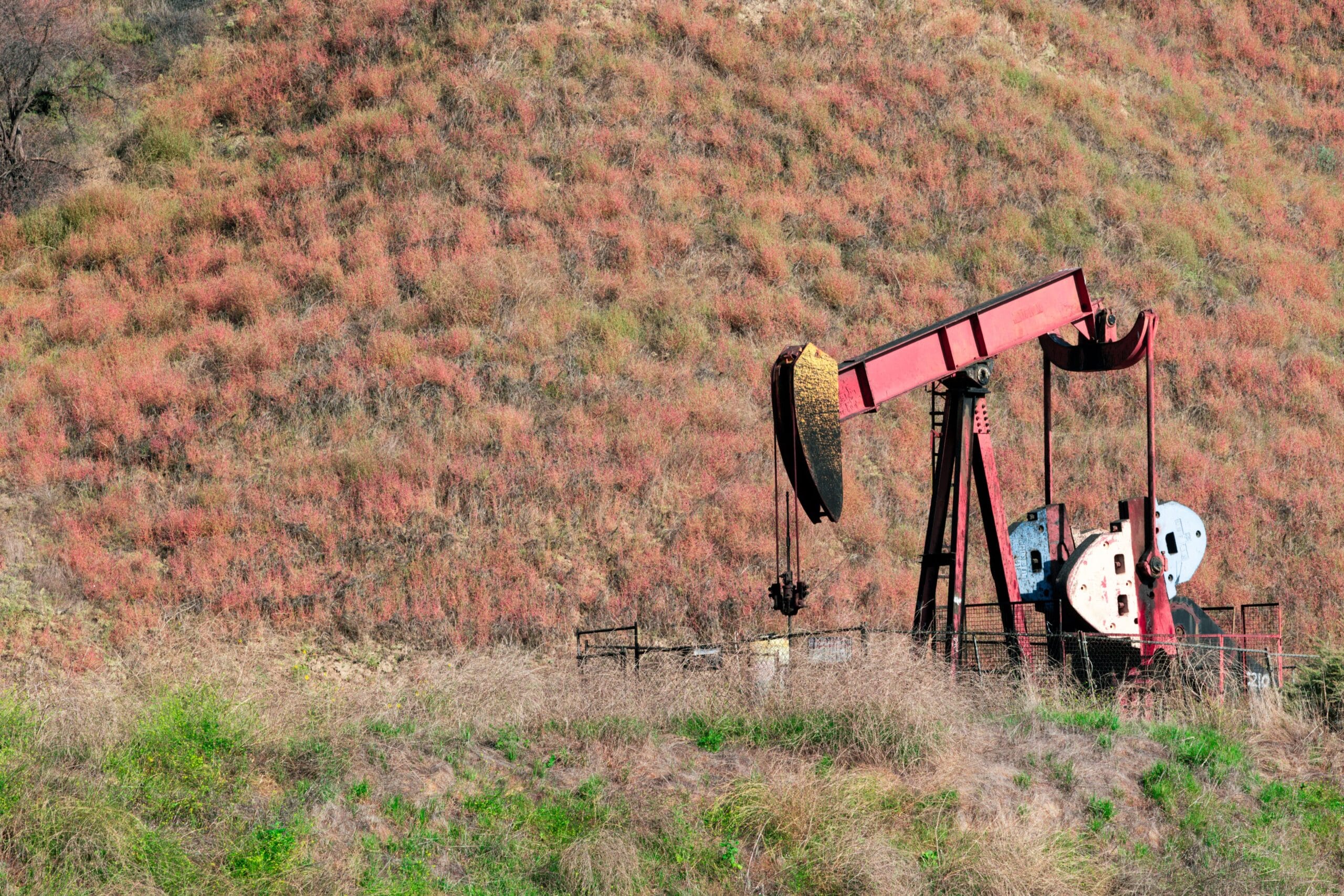
The question for a Butler County owner, then, is not whether the shallow well makes money. It is what its lease says, and whether that language reaches the Marcellus. Do not assume an old lease is dead because the well is nearly dead — or that it is alive and all-encompassing.
Where Pennsylvania courts have drawn the lines
Three decisions do most of the work, and they do not all run the same way.
- Marginal production usually survives. In T.W. Phillips Gas & Oil Co. v. Jedlicka, 42 A.3d 261 (Pa. 2012), on a 1928 Indiana County lease, the Pennsylvania Supreme Court held that where production has been marginal or sporadic, “in paying quantities” is judged with reference to the operator’s good-faith judgment in keeping the well running. A money-losing year does not by itself end a lease.
- Payments without production do not. In Hite v. Falcon Partners, 13 A.3d 942 (Pa. Super. 2011), the Superior Court held that a lessee could not postpone development past the primary term by continuing to write delay rental checks. Nothing was drilled and nothing produced, so the leases lapsed.
- A producing lessee generally need not go deeper. In Caldwell v. Kriebel Resources Co., 72 A.3d 611 (Pa. Super. 2013), landowners argued that an operator producing only from shallow zones had breached a duty to develop the Marcellus. The court disagreed and the Supreme Court declined the appeal. Read it closely, though: the result turned on that lease’s express disclaimer of implied covenants and its guaranteed delay rentals. Pennsylvania still recognizes an implied covenant to develop where royalty is the owner’s only compensation, so lease wording decides the outcome, not a general rule.
What to pull before anyone talks about price
Butler County land records sit with the Recorder of Deeds in the Government Center at 124 West Diamond Street in Butler. Three things are worth finding there, and a buyer will look for them anyway.
- The original recorded lease and every assignment. Old Butler leases have often passed through five or six operators, and the current holder may not be the name on the check.
- Any depth limitation or Pugh clause. Some leases were amended during the 2008-2012 leasing wave to release deep rights or sever shallow from deep, and those amendments are recorded.
- A recorded release, if one exists. Operators who abandon shallow wells often never record one, leaving a cloud a buyer will price for even when the lease is practically defunct.
What the records will never show is a forced pooling order, because Pennsylvania has none for the Marcellus. No agency can compel you into a unit, and an operator cannot simply develop around you, so a clean, unleased deep right inside a drillable block carries genuine leverage.
How the lease question turns into a number
If your tract is already in a producing Marcellus unit, the valuation is ordinary royalty arithmetic: your decimal, current production, the shape of the decline curve ahead of it, and a discount rate reflecting how much value sits years out. Butler’s curves matter here. Among Pennsylvania’s 2016-spud unconventional wells, average per-well gas production had fallen 53.2 percent from peak by 2025 — the mildest decline of any county in that statewide group, where the average was 75.5 percent and Sullivan County’s wells had fallen 97.1 percent. Gentler decline puts more value in later years, which cuts against aggressive discounting.
If your tract is not producing, what is being priced is the chance that someone drills it, and an unreleased old lease sits directly on top of that chance. A buyer facing an ambiguous shallow lease will either discount for the title work or make the offer contingent on clearing it. That discount is not a negotiating trick; it is the cost of a quiet title action or a negotiated release.
Two more specifics belong in the arithmetic. The royalty rate you think you have may not be the royalty you receive: Pennsylvania’s Guaranteed Minimum Royalty Act, 58 P.S. § 33, requires at least a one-eighth royalty, but in Kilmer v. Elexco Land Services (2010) the Supreme Court held it may be computed at the wellhead by the net-back method, so post-production costs can be shared where the lease allows it. And Pennsylvania levies no severance tax. The Act 13 impact fee is paid by unconventional producers and distributed to governments — Butler County’s share for the 2025 reporting year was $2,553,247.91, up about 58 percent, the Butler Eagle reported — but none of it reaches royalty owners, and none comes off your check.
When the answer is to do nothing
If your deep rights are clean, unleased and inside a block an active operator is working toward, waiting is often the better economics. You hold something nobody can take by order, in a county where private operators are still adding locations and the liquids give the gas a premium. Selling into that is selling optionality cheaply.
The case for selling is usually different in kind: an interest split among a dozen heirs, a decimal that generates more paperwork than income, an estate that needs settling, or a shallow-lease cloud bad enough that no operator will take the title risk and you have no appetite to litigate it. Those reasons have little to do with the price of gas this quarter.
Context helps. Compare Butler with Warren County mineral rights in the far northwest, where the same century-old shallow leases exist but no commercial Marcellus lies beneath them: there the old lease is the whole asset, not an obstacle to a better one. Then with Washington County mineral rights, the state’s other major condensate producer, where the wet-gas prize sits under a thicker Marcellus and the title history is tangled with coal too. Butler sits between them, which is why the lease file matters so much here.
If you own minerals or royalties in the county and want a straight read, start with our Butler County mineral rights page, or see what it takes to sell Pennsylvania mineral rights anywhere in the state. We buy producing and non-producing interests for cash, and we will say plainly when holding is the better call. You can also reach us through our contact page.
MINERAL RIGHTS & ROYALTIES
Ready to explore an offer for your mineral rights?
Tell us a little about your interest. Get a free, no-obligation review from Selling My Mineral Rights.