When the Check Stops: Suspended Royalties in Grady County, Oklahoma
MINERAL RIGHTS & ROYALTIES
What could your mineral rights be worth?
Tell us a little about your interest. Get a free, no-obligation review from Selling My Mineral Rights.
A royalty check from a Grady County well arrives every month for years, and then one month it does not. No letter comes with the silence. The well is still making gas, but the money has stopped. In Oklahoma that almost always means the interest has gone into suspense, and the useful question is which statutory clock is running while you wait, because Oklahoma runs two of them at very different rates, and a third can eventually take the minerals themselves.
Two Clocks Start the Day the First Barrel Sells
Oklahoma’s Production Revenue Standards Act, at 52 O.S. 570.10, sets the schedule. First payment is due no later than six months after the date of first sale. After that, proceeds are due by the last day of the second succeeding month after the month in which the production sold, so gas sold in March is owed by the end of May. Miss that and subsection D(1) applies: the portion not timely paid earns twelve percent per annum, compounded annually, from the end of the month of sale until it is paid.
Why “Unmarketable Title” Is Worth Real Money to the Payor
Subsection D(2)(a) carves out a cheaper rate. Where proceeds are withheld because title to them is not marketable, they earn six percent compounded annually for periods before November 1, 2018, and the prime rate as reported in the Wall Street Journal thereafter. Prime stood at 7.00 percent after its September 2026 change, and it floats. On ten thousand dollars held three years, twelve percent compounded accrues about $4,049; a flat seven percent accrues about $2,100. The statute spells out annual compounding only for the six percent figure, so how a payor applies the prime branch is worth asking in writing.
Two things keep that from being a free option. Nobody gets to define marketability however they like: the statute ties it to the then-current title examination standards of the Oklahoma Bar Association. And the interest need not be asked for. In the Cline v. Sunoco litigation in Oklahoma federal court, the court read section 570.10 to require interest be paid at the same time as the late payment, with no demand needed, a point the Oklahoma Bar Journal treats as settled. A suspense release with no interest line on it is a question, not a courtesy.
The Affidavit That Stops the Cheaper Clock
Read D(2)(a) to the end and it names what the payor is waiting for. The lower rate runs until title becomes marketable, or until the holder receives an acceptable affidavit of death and heirship conforming to 16 O.S. 67. Section 67 is specific: the affidavit must state that the decedent died without a will, or that a will was never probated in Oklahoma, or that it was probated but the mineral interest was left out of the final decree, with the documents attached. It must name the heirs and their relationship to the decedent. To ripen into marketable title against an adverse claimant, it must then sit of record ten years with no inconsistent instrument filed.
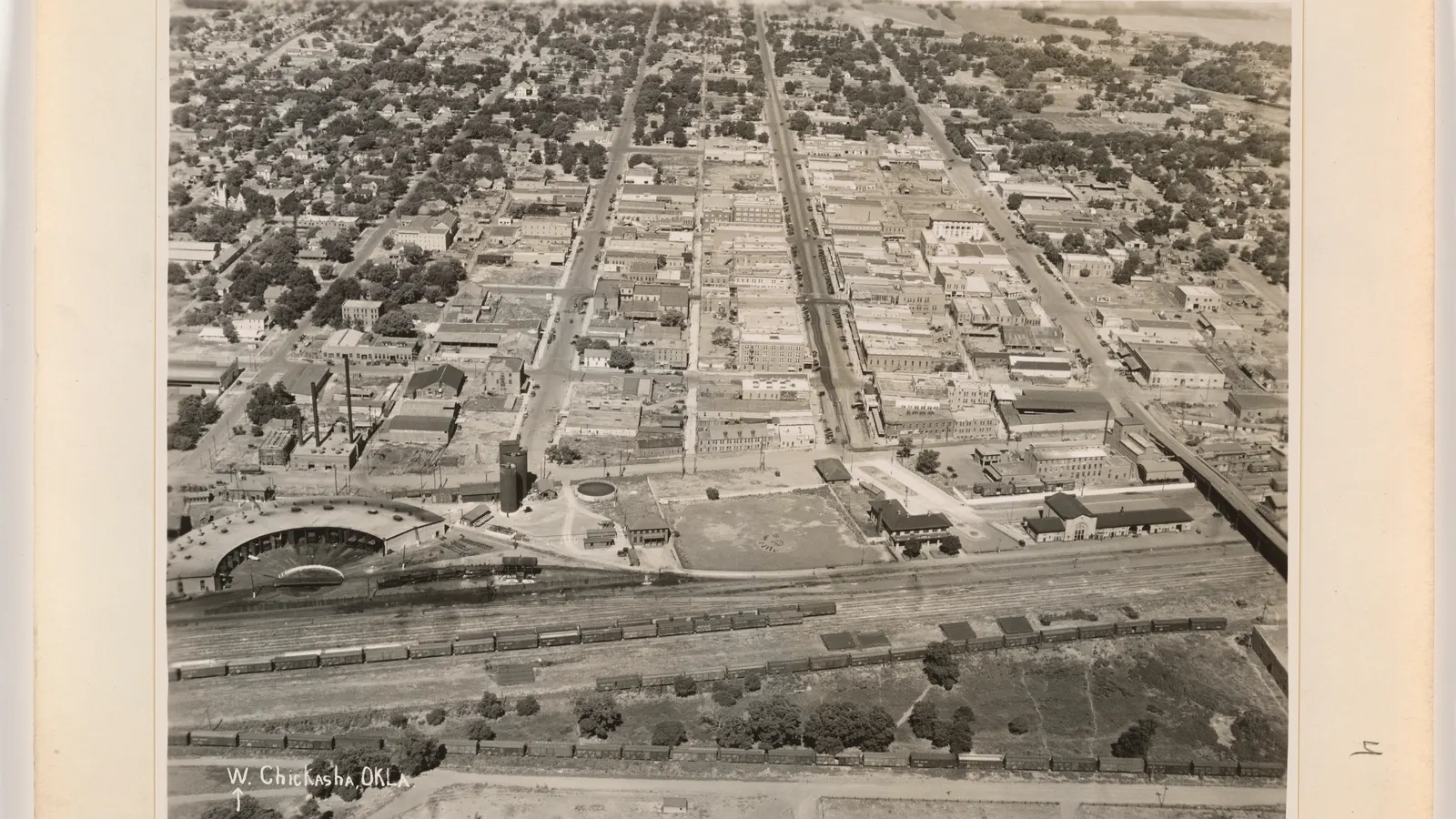
Those are two different things, and owners conflate them constantly. The ten-year ripening defeats adverse claims; the payor’s duty to resume paying turns on whether it holds an acceptable affidavit now. Where a payor will not accept one, the faster cure is a probate or determination-of-heirs proceeding, not more correspondence. Either way the paper goes to the Grady County Clerk at the courthouse on West Choctaw Avenue in Chickasha, whose land records run back to 1903 and almost certainly contain the deed that severed your minerals.
The 120-Day Lever Almost Nobody Pulls
Subsection D(2)(b) is the part worth memorizing. Where marketability has stayed uncured, or no conforming affidavit has been given, for 120 days from the date payment was due, any person claiming the right to the proceeds may require the holder to interplead them, with all accrued interest, into court. That moves your file out of a title department’s queue and onto a judge’s schedule. It also costs money, and the court decides who gets paid, so it fits contested ownership or a payor gone quiet for years, not a file one affidavit would fix.
Fifteen Years, and the State Can Sell the Minerals
Oklahoma has no dormant mineral act. Letting a severed interest sit unused for decades does not forfeit it the way it might in Ohio or North Dakota. But Oklahoma has a different mechanism, driven by unclaimed money rather than non-use, which means it threatens producing interests.
- Under 60 O.S. 658, intangible property unclaimed more than five years after becoming payable is presumed abandoned and remitted to the Oklahoma State Treasurer, though mineral proceeds are never reportable sooner than six months after first sale.
- Under 60 O.S. 658.1, once the interest has generated proceeds presumed abandoned for fifteen years, the mineral interest itself becomes subject to judicial sale. Holders report the owner’s name, last-known address and legal description to the Treasurer, who copies the attorney general and the county’s district attorney and sends a list of names to the county clerk to keep for public viewing.
- Under 84 O.S. 271.1 and 273 through 277, the attorney general or district attorney petitions the district court. Summons issues as in other civil cases plus a summons by publication, with thirty days from first publication to answer, and judgment goes to the state by default if nobody appears. The sheriff then sells under court order at no less than a minimum price the judge fixes.
One mercy: proceeds of such a sale remain subject to the Unclaimed Property Act, so a former owner who surfaces later can still claim the money, though not the minerals. Two free checks are worth making first: the State Treasurer’s unclaimed property search and the list the county clerk must keep. Well records sit with the Oklahoma Corporation Commission.
Why Grady County Generates So Many of These Files
Grady County sits in the SCOOP, where the targets are the Woodford, Sycamore and Springer. Gulfport Energy, whose roughly 73,000 net reservoir acres there lie primarily in Garvin, Grady and Stephens counties, describes a Woodford of 200 to over 400 feet overlying the Hunton Limestone and a Sycamore of 150 to over 450 feet above it. Continental Resources is among the most active Anadarko Basin operators and has farmed out a 49 percent stake in Anadarko gas assets to TotalEnergies, while Ovintiv’s Oklahoma position was sold in 2026. Confirm the current payor before writing to the name on a ten-year-old stub.
The suspense problem follows from that activity. Every new horizontal unit laid over an old quarter section forces a fresh title run through decades of heirship nobody cleaned up, because the shallower wells that produced here were drilled when the money was smaller and the scrutiny lighter. Severance comes off the top either way: gross production tax is seven percent, reduced to five percent for the first 36 months, and it attaches to the royalty interest as a lien (68 O.S. 1001).
What a Suspended Interest Is Actually Worth
Start with the decimal, because nobody can price what they have not calculated. Forty net mineral acres in a 640-acre unit is 0.0625 of the unit. At a three-sixteenths royalty that is 0.0625 multiplied by 0.1875, or 0.01171875, which section 570.12 requires be carried to at least the sixth decimal place: 0.011719. That section also entitles you to a statement showing the well, the month and year of sales, volumes, price, severance taxes, your decimal and your gross and net share, with other deductions itemized on request.
A buyer then prices two things separately. The first is the production stream, and a SCOOP horizontal declines hard through its first eighteen to twenty-four months, so a well that came online two years ago and one that came online this spring are not the same asset at the same decimal. The second is title risk and the time to cure it, which is where suspended interests get discounted: expect a holdback until suspense is released, and expect the accrued statutory interest to be negotiated separately.
Most Grady County suspense files are not sale candidates. If the only defect is a missing affidavit or an unprobated estate, curing it and collecting the proceeds plus statutory interest usually beats selling into the defect, because otherwise you are paying a buyer for a few weeks of work. Selling earns its keep when the chain is broken across several states and generations, when co-heirs cannot agree, or when probate would eat most of the value. Be skeptical of any per-acre figure quoted before anyone has seen a division order.
Get the Money Moving First
Ask the payor in writing for the suspense detail and the reason code, search the Treasurer’s database under every spelling of the family name, and have someone walk the chain at the clerk’s office in Chickasha. Once you know whether this is a missing affidavit or a broken chain, the decision becomes a comparison instead of a guess. For a cash figure to weigh against curing it yourself, start on our Grady County, Oklahoma page, see how to sell Oklahoma mineral rights if the family holds acreage elsewhere in the state, or contact us with the well name. Families holding north of Grady will find the same suspense and title mechanics on our Canadian County mineral rights page.
MINERAL RIGHTS & ROYALTIES
Ready to explore an offer for your mineral rights?
Tell us a little about your interest. Get a free, no-obligation review from Selling My Mineral Rights.