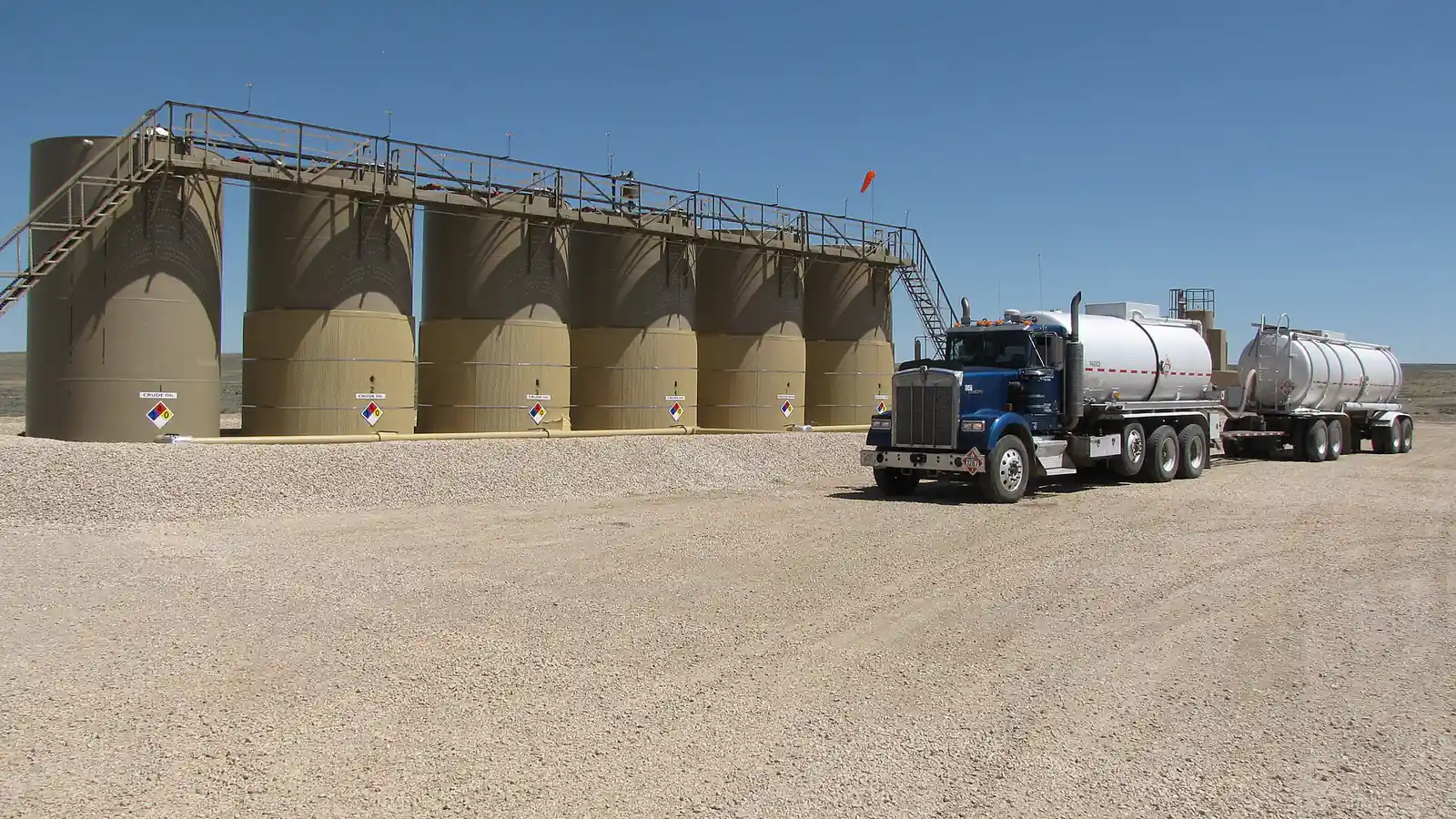
Up 71%, Down 35%: What Wyoming’s 2025 Production Swings Mean for Royalty Owners
MINERAL RIGHTS & ROYALTIES
What could your mineral rights be worth?
Tell us a little about your interest. Get a free, no-obligation review from Selling My Mineral Rights.
A royalty check reflects production, price and deductions all at once. When the number changes, most owners look at price first. In Wyoming in 2025, though, some of the biggest changes came from production itself, and the direction depended on the county.
We added up the Wyoming Oil and Gas Conservation Commission’s well-level production data by county for 2025. Statewide, oil and gas were both slightly lower than in 2024. Inside that total, four counties had very different years:
- Campbell: 24.1 million barrels of oil, about 22.9% of the state and second only to Converse, plus 135.9 billion cubic feet (Bcf) of gas.
- Carbon: 2.22 million barrels of oil, up about 71% from 1.30 million in 2024. Gas reached 75.2 Bcf, moving Carbon up to fifth in the state.
- Laramie: 7.26 million barrels of oil. Still third in the state, but down 35% from 11.14 million in 2024.
- Fremont: 63.1 Bcf of gas, sixth in the state and down 17% from 2024. The first half of 2026 was down another 26% from the first half of 2025.
Campbell County: Steady at Number Two
Campbell’s share of Wyoming oil barely moved: 23.0% in 2024, 22.9% in 2025 and 23.3% in June 2026. What sets it apart is the number of formations that produce. In 2025 the Niobrara (8.84 million barrels), Parkman (5.08 million), Turner (3.20 million) and Mowry (2.72 million) all contributed, and the Mowry shale was the county’s largest gas source. For an owner, stacked formations mean a tract can see new wells aimed at a different zone years after the first one was drilled.
EOG Resources was Campbell’s top operator in the first half of 2026, followed by Anschutz Exploration and Ballard Petroleum. Operators can change, though. Devon, which produces in both Campbell and Converse counties, said in August 2026 that a portfolio review was underway. Campbell is also unusual in that oil wells, coalbed methane wells and the two largest coal mines in the country all operate in the same county. More on our Campbell County mineral rights page.
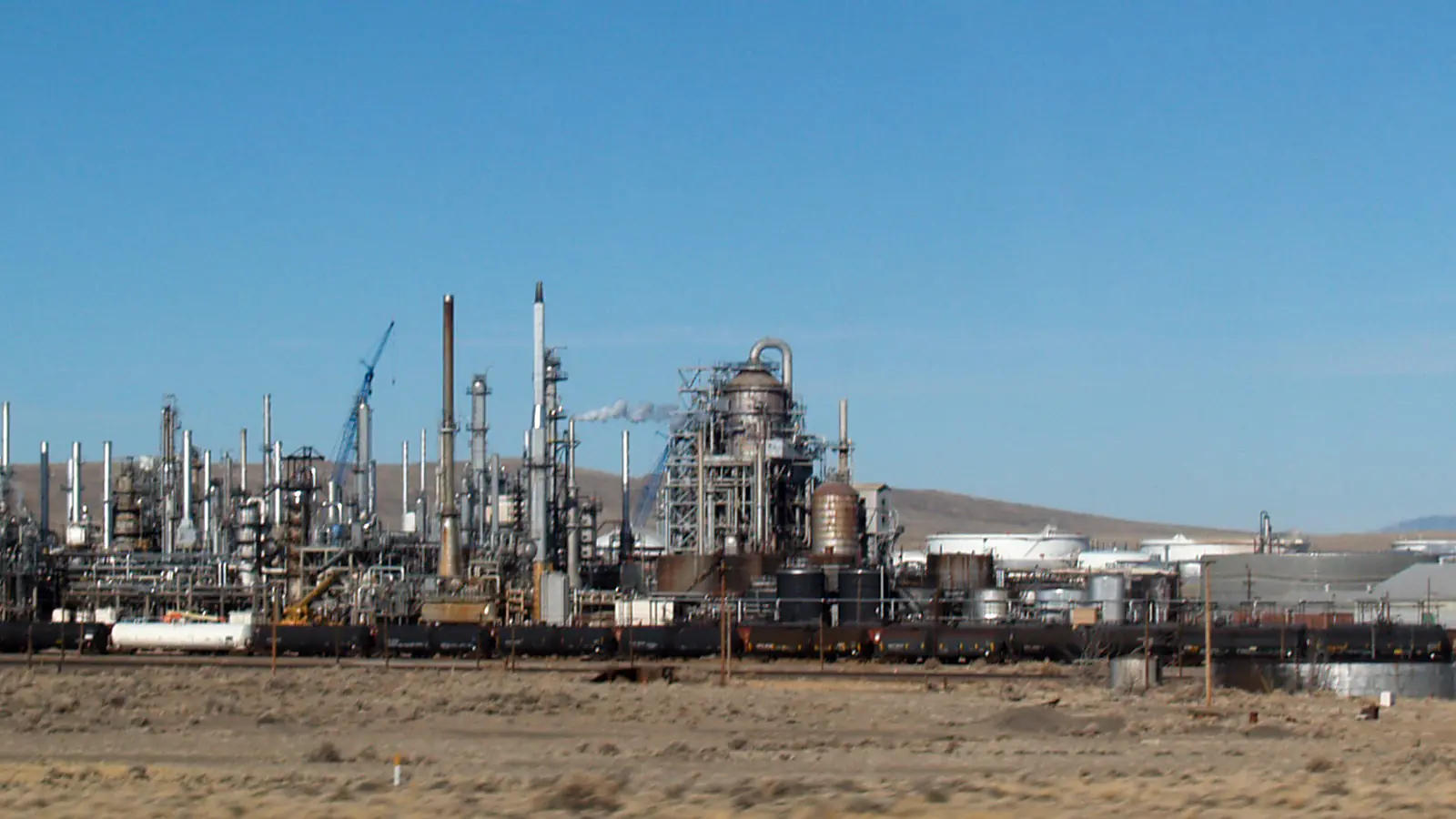
Carbon County: The Biggest Percentage Gain
Carbon’s oil rose about 71% in 2025. Most of the increase came from horizontal wells outside named field boundaries, which the WOGCC books as wildcat (“WC”) production, and from the Barrel Springs field. Crowheart Energy, now owned by Williams, is the dominant operator, and the Echo Springs gas plant that serves the Wamsutter area sits in Carbon County.
Two cautions apply in Carbon. First, the operator of the Wertz CO2-flood field reports no gas sales from those properties, so much of the “gas” reported there is likely recycled carbon dioxide. The county gas total overstates what is actually sold. Second, much of Carbon’s production lies inside the old Union Pacific land-grant checkerboard, where odd- and even-numbered sections passed to different owners after 1862. Ownership of any one section has to be confirmed in the records, not assumed. The Carbon County Clerk’s recording office is now at 215 Buffalo Street in Rawlins. See our Carbon County page for more.
Laramie County: Still Third, but Falling
Laramie remains Wyoming’s third-largest oil county, but its share of state oil fell from 10.4% in 2024 to 6.9% in 2025 and 5.3% in June 2026. About 94% of its 2025 oil came from the Codell sandstone, drilled horizontally. The same play continues south into Weld County, Colorado.
EOG was still Laramie’s largest producer in the first half of 2026. However, its 2025 annual report listed no new Denver-Julesburg Basin completions, which may help explain the decline. PEDEVCO became a larger presence after its October 2025 merger with North Peak Oil & Gas, operating through North Silo Resources and Longs Peak Resources. When the leading operator slows its drilling, existing wells keep producing but decline without new ones to replace them. Owners can read more on our Laramie County mineral rights page.

Fremont County: When One Field Carries a County
Fremont’s gas depends heavily on the Madden field, which supplied about 85% of the county’s gas in 2025. The deep Madison wells at Madden produce from more than 23,000 feet down. Their gas contains about 12% hydrogen sulfide and 21% carbon dioxide and is processed at the Lost Cabin gas plant. In 2025, Madden’s monthly output dropped from about 5.7 Bcf in June to 0.36 Bcf in September. That drop coincided with a fire near a pipeline receipt point south of the Lost Cabin compressor station, which Colorado Interstate Gas reported on July 31, 2025. Output recovered toward the end of the year.
Madden and Lost Cabin are now operated by Aethel Energy, although the WOGCC still lists the operator as Contango Resources. The tax value of the plant and related assets was the subject of Contango Resources v. Fremont County Board of Equalization (2025), in which the Wyoming Supreme Court upheld the county’s valuation of roughly $190 million. Part of the Wind River Indian Reservation also lies in Fremont County, where tribal and allotted minerals are federal trust minerals managed through federal agencies. When one field and one plant carry a county, an outage shows up directly in royalty checks. See our Fremont County page.
How a New Well Reaches Your Tract
Stacked formations only help you if a well actually gets drilled through your acreage, and Wyoming — unlike Texas — has a working compulsory pooling statute to make that happen. Under section 30-5-109, where a drilling unit covers separately owned tracts that have not been pooled voluntarily, the Oil and Gas Conservation Commission can pool them by order after notice and a hearing. For most royalty owners this is invisible machinery, but it sets the unit your decimal is calculated against.
It matters most if you are unleased. An unleased owner who does not join the well is not simply cut out: section 30-5-109(h) entitles them to a cost-free royalty equal to the greater of 16 percent, or the acreage-weighted average royalty of the leased tracts in the drilling unit. Meanwhile the producer recovers costs from non-consenting owners with a risk penalty — broadly up to 300 percent of drilling and reworking costs where the tract is already leased, and 200 percent on a first well where it is not.
There is also a second bite. Once the producer has fully recovered those costs, it has 30 days to notify the non-consenting owner and offer the chance to participate as a working interest owner going forward. The owner then has 60 days to choose, and an owner who does not reply is treated as electing to carry on taking the royalty. If you hold unleased acreage in a developing section — in Converse, Sweetwater or anywhere else in the state — those two deadlines are worth diarising, because silence is itself an election.
What This Means for Your Royalty Check
A swing in a county total does not tell you what any single interest is worth, but it explains a lot of check stubs. If your check dropped, compare volumes before price. Wyoming’s Royalty Payment Act requires each payment to show volume, price, taxes and deductions, which makes that comparison possible. Our post on reading a Wyoming royalty check walks through the stub line by line.
Taxes also come off the top. Wyoming’s severance tax is 6% on oil and gas (4% for qualifying stripper oil wells). Royalty owners also bear their share of the county ad valorem tax on production, which averaged about 64 mills statewide in 2024. Wyoming has no state income tax, but federal income tax still applies to royalties and to sale proceeds.
If you are weighing whether to sell your oil and gas royalty rights, we can review a check stub, lease or legal description and explain what drives the offer. Start with the Campbell, Carbon, Laramie or Fremont County pages. You can also read how to sell mineral rights in Wyoming statewide, including Sublette, Converse and Sweetwater, or contact us directly.
Sources: Wyoming Oil and Gas Conservation Commission, production by county by year (2024—2026 well-level data, summed by county, retrieved October 2026; 2026 figures preliminary); WOGCC Supervisor Report, March 2026; Wyoming State Geological Survey, Oil & Gas Facts; Colorado Interstate Gas, Notice 122532 (July 31, 2025); Contango Resources v. Fremont County Board of Equalization, 2025 WY 29; EOG Resources, PEDEVCO and Devon Energy company filings; W.S. 39-14-204, 30-5-305 and 30-5-109 (as amended by 2020 House Bill 14); Leo Sheep Co. v. United States, 440 U.S. 668 (1979). This article is general information, not legal or tax advice.
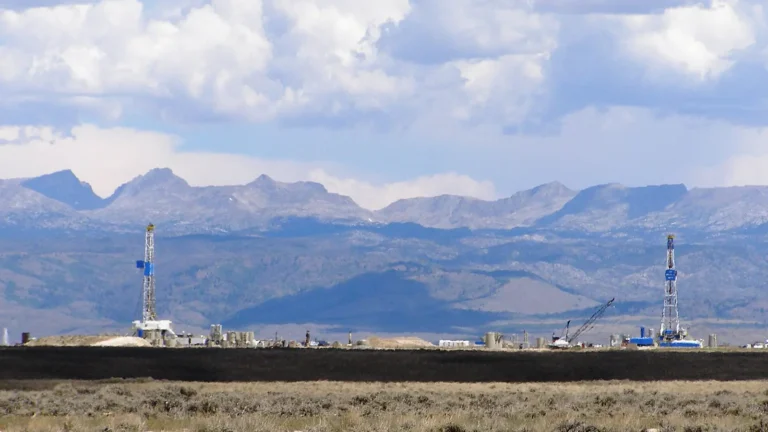
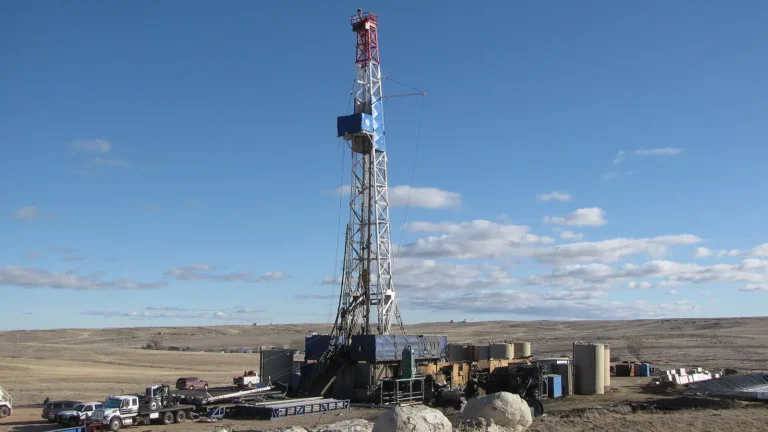
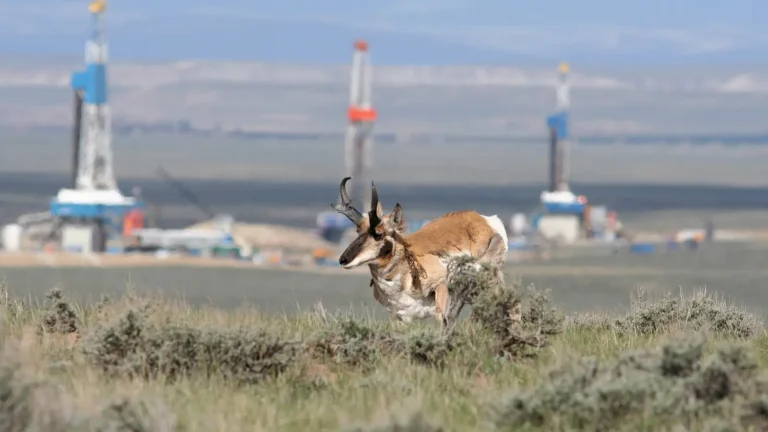
Photos: David Korzilius, Bureau of Land Management / Wikimedia Commons, public domain; Charles Willgren / Wikimedia Commons, CC BY 2.0; Carol M. Highsmith, Library of Congress / Wikimedia Commons, public domain.
MINERAL RIGHTS & ROYALTIES
Ready to explore an offer for your mineral rights?
Tell us a little about your interest. Get a free, no-obligation review from Selling My Mineral Rights.