Houses Above, Woodford Below: Canadian County, Oklahoma Mineral Rights
MINERAL RIGHTS & ROYALTIES
What could your mineral rights be worth?
Tell us a little about your interest. Get a free, no-obligation review from Selling My Mineral Rights.
Canadian County is the fastest-growing county in Oklahoma, and most of what it is growing on used to be wheat ground. Yukon, Mustang, Piedmont and the western edge of Oklahoma City have been eating section after section of farmland for twenty years. If your family kept the minerals when the farm sold, you now own an undivided interest under streets, driveways and four hundred roofs. The question owners ask is whether that ruins the mineral. It does not. But it changes who gets paid for what, and it changes how a well gets to your rock.
The Severance Happened at the Closing Table, Not at the Wellhead
In almost every Canadian County subdivision, the mineral estate was separated from the surface long before the first lot was staked. A family sold 160 acres to a developer and reserved all or half the minerals in the deed. The developer platted the quarter, the lots sold, and the homeowners took title to surface only. The minerals stayed where the reservation put them, then moved by will, by probate decree and by deed among cousins for two or three generations.
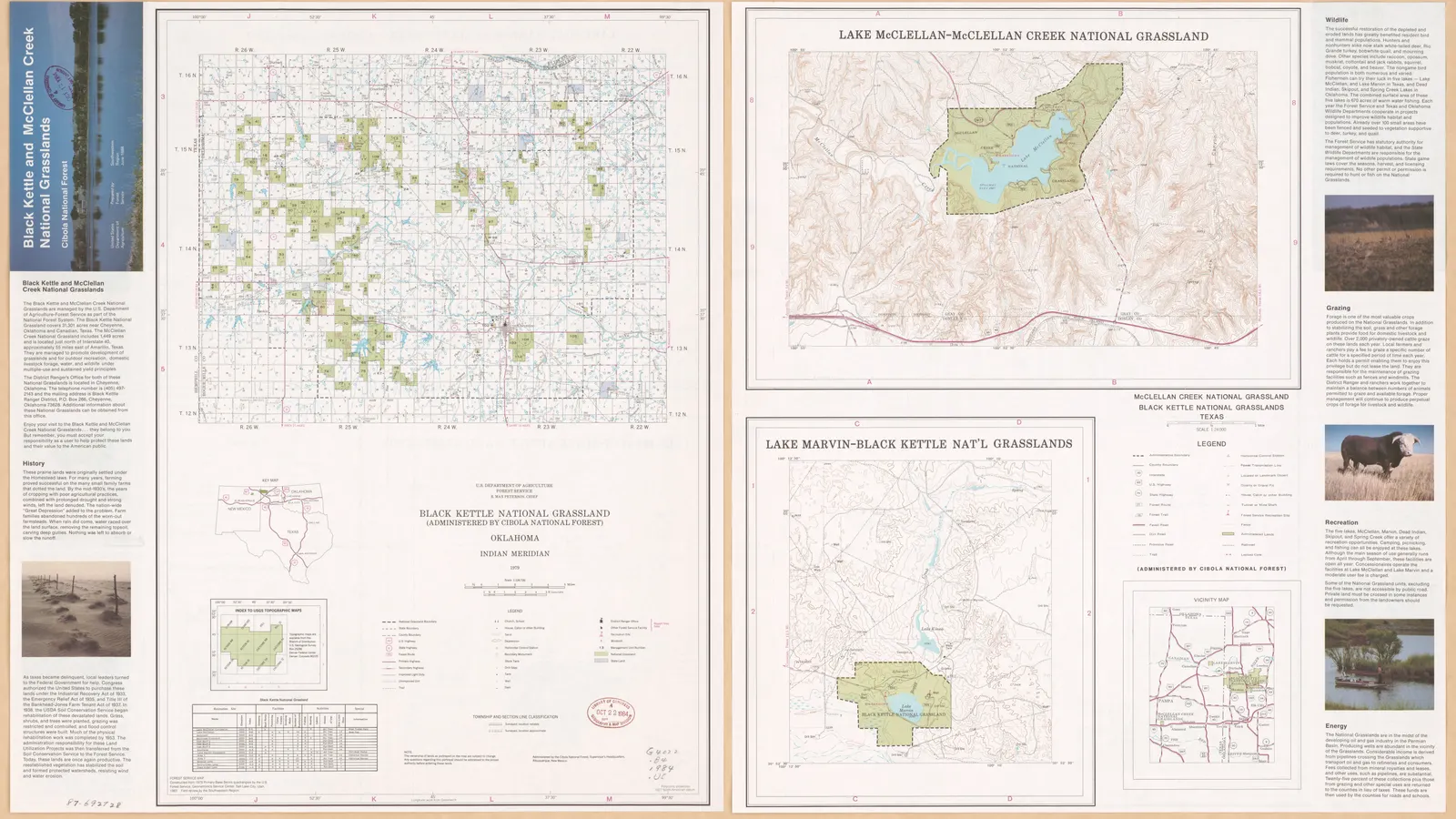
That is why Canadian County mineral title reads strangely. The surface is described as Lot 14, Block 3 of some addition to the City of Yukon. The mineral interest under it is still described the old way, by quarter and section against the Indian Meridian, because the reservation was written before the plat existed. An Oklahoma Corporation Commission pooling docket for Canadian County from July 2026 describes its unit as Section 7, Township 11 North, Range 10 West — the same grid, untouched by anything that happened above it. Every instrument in that chain is recorded with the Canadian County Clerk in El Reno, and tracing it is ordinary title work.
What a City Can Actually Do About a Well
Owners under city limits often assume a municipality can simply refuse to let anyone produce their minerals. Oklahoma law says otherwise. Under 52 O.S. § 137.1, a municipality or county may adopt reasonable rules on road use, traffic, noise and odors, and may set reasonable setbacks and fencing requirements for well sites, but it “may not effectively prohibit or ban any oil and gas operations.” Everything else sits with the Corporation Commission. The Oklahoma Attorney General read the statute the same way in Opinion 2015-12, concluding that conflicting local regulations are invalid and unenforceable regardless of when they were adopted.
The practical effect is bigger than the legal one. A Cana-Woodford lateral is two miles long. An operator does not need a pad inside your addition; it needs a pad on a remnant of pasture a mile away, outside the city, and it drills under the subdivision from there. So the development question for a mineral owner in Piedmont or Mustang is rarely whether a city will allow it. It is whether the operator can assemble enough of the section to make a unit worth drilling — and in a platted quarter that means dealing with however many heirs the reservation has produced.
The Surface Damages Check Is Not Yours
This is the single most common misunderstanding in a developing county, and it costs people nothing only because they find out early. Oklahoma’s Surface Damages Act requires an operator to negotiate compensation before entering with heavy equipment, and if the parties cannot agree, a panel of three appraisers values the damage. But read the definitions in 52 O.S. § 318.2 and § 318.5: “surface owner” means the owner of record of the surface of the property on which the drilling operation is to occur. Not the mineral owner. If a pad goes on the last undeveloped eighty acres of your grandfather’s farm, the damages money goes to whoever owns that dirt today — the developer, the farmer, the homeowner. Your compensation is the royalty, and only the royalty.
The second half of that is the better half. Because you own no surface, suburban growth imposes no cost on you. You are not negotiating pad locations, not living with truck traffic, not paying for reclamation. You hold a cost-free interest in whatever the section produces, with no obligation attached to the ground above it.
What Sets the Number: Decimals, Depth and Decline
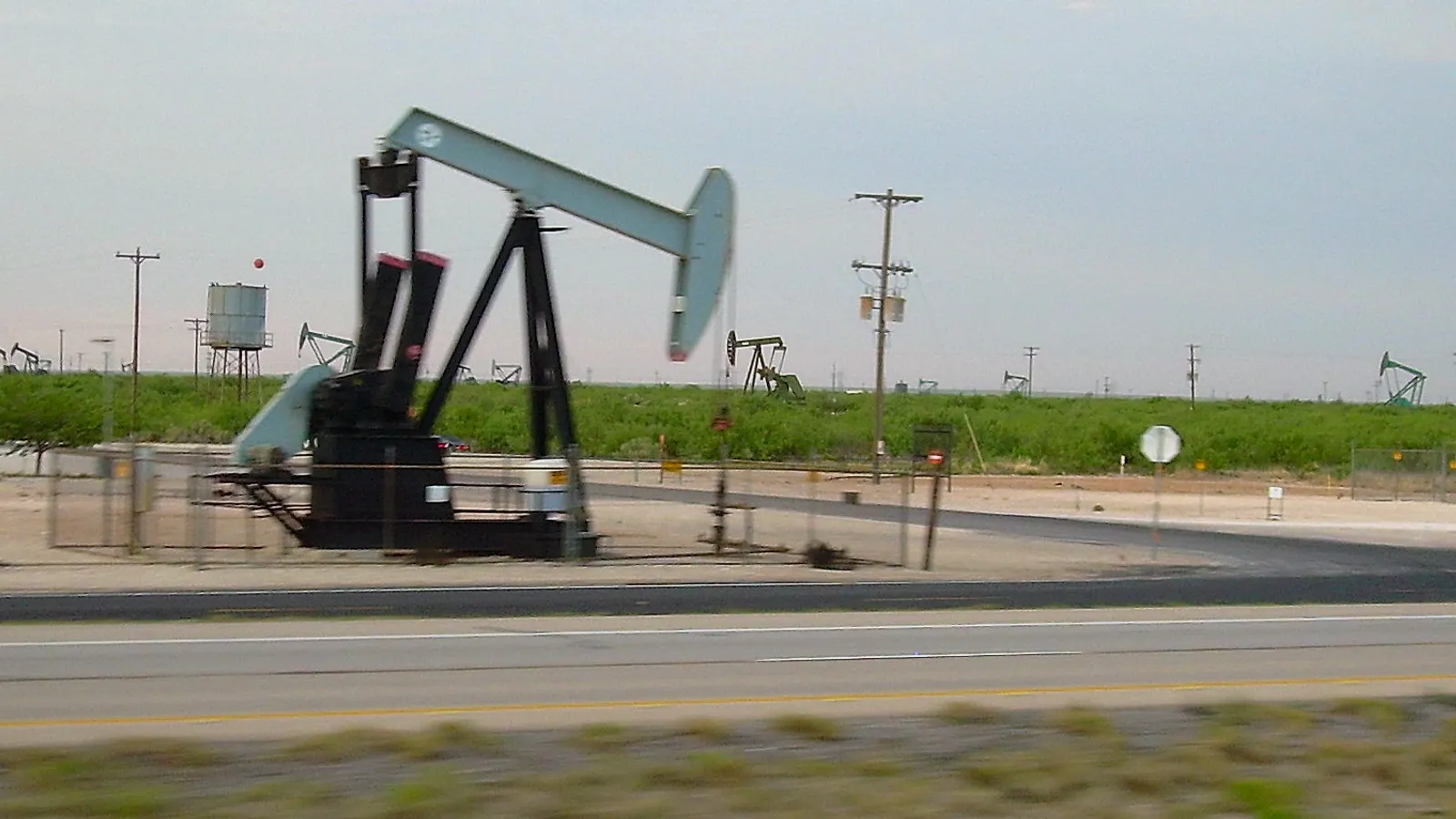
Underneath all of this is the Cana-Woodford, the play named for this county, running through the deep southeastern Anadarko Basin at true vertical depths commonly in the 11,000 to 14,500 foot range with measured depths well past 16,000 feet. It is expensive, gas-and-liquids rock, and still the busiest drilling target in the state — Oklahoma Energy Today has tracked it as Oklahoma’s most active play through 2026, with roughly twenty rigs working it.
Value follows arithmetic, not acreage folklore. Start with the decimal. Ten net mineral acres in a 640-acre unit at a three-sixteenths royalty is 10 ÷ 640 × 0.1875, or 0.0029297. If that unit’s wells together sell 5,000 Mcf a day at $3.00, the unit grosses $15,000 a day and your share is about $44 a day, or roughly $1,320 a month before tax and deductions. Oklahoma’s gross production tax attaches directly to the royalty interest under 68 O.S. § 1001(C), at 5 percent for a new well’s first 36 months and 7 percent after that, and subsection (D) makes that payment in lieu of ad valorem tax on the production. So about $92 of that month comes off the top at the full rate.
Then apply the part that decides everything: the decline curve. A new Cana-Woodford well gives up a large share of its first-year rate in the first eighteen to thirty months, and the cash flow a buyer is pricing is the long flat tail, not this month’s check. That is why offers on producing Oklahoma royalty are normally quoted as a multiple of recent monthly net income, with the multiple widening or narrowing based on how old the wells are, how many undrilled benches remain in the section, whether gas has a firm outlet, and whether the title is clean enough to pay without a cure. Non-producing minerals under a subdivision are priced on a different basis entirely — on the probability that someone drills the section at all, discounted for the years it may take.
The Name on the Check Changes Faster Than the Rock
Canadian County owners have watched a lot of letterhead change lately. Devon and Coterra combined in May 2026, with Coterra surviving as a Devon subsidiary. Ovintiv agreed in February 2026 to sell its entire Anadarko Basin position, about 360,000 net acres, and closed that exit in April 2026. Newer private operators now appear on Corporation Commission dockets for Canadian County sections that used to carry familiar public-company names.
None of that changes your decimal. It does change who you call, where your division order comes from, and how quickly a suspended interest gets released, because every transfer is an opportunity for an interest to drop into suspense while the new payor rebuilds its ownership file. If a check stops after an operator changes hands, that is a title and payment question, not a reason to assume the well quit.

When Selling Makes Sense Here, and When It Does Not
Three situations here genuinely favor a sale. A fractional interest so small and so far subdivided that the annual income will never justify the bookkeeping, the tax reporting, or the probate it will require again in a generation. An estate being divided among heirs who do not all live in Oklahoma and will not all agree on a lease. And a non-producing interest under a platted addition where no operator has filed anything in the section for years.
Against that, there are good reasons to keep. If your section has producing wells still inside their first three years, you are being paid on a declining curve that a buyer is already discounting, and you are capturing the reduced 5 percent tax rate while it lasts. If the section has undrilled Woodford or Mississippian bench left, a buyer is paying for that upside and you are selling it. And if your interest was recently pooled, the Corporation Commission’s own royalty owner guidance is worth reading before you treat the order as final — the options and the election window are set in the order itself, and they differ case to case.
If you want a straight read on what your interest is worth, the Canadian County mineral rights page is the place to start, and it is where our offers on this county are worked up. The same Cana-Woodford fairway runs west out of here, so an owner weighing Custer County mineral rights is looking at the same formation and the same Commission procedure, just without any of the platting and municipal questions that come with a growing county. If you hold interests in more than one county and want them valued together, we buy and sell Oklahoma mineral rights statewide, and you can reach us directly through our contact page.
MINERAL RIGHTS & ROYALTIES
Ready to explore an offer for your mineral rights?
Tell us a little about your interest. Get a free, no-obligation review from Selling My Mineral Rights.