

How a Haynesville Unit Line Can Split a Bossier Parish, Louisiana Mineral Servitude
MINERAL RIGHTS & ROYALTIES
What could your mineral rights be worth?
Tell us a little about your interest. Get a free, no-obligation review from Selling My Mineral Rights.
Mail from Bossier Parish tends to start the same way. A royalty check came for a few years and then stopped, or a succession turned up a 1948 reservation nobody has thought about since. Underneath it is one question: do I still own anything, and what is it worth? In Louisiana the answer often turns on something with no marker on the ground — where a drilling unit boundary falls across the tract your minerals were carved out of. Under the Mineral Code that unit line doubles as a prescription line, and it can leave one family owning minerals under part of an old homeplace and nothing under the rest.
A Louisiana mineral interest is a servitude, and servitudes expire
When minerals are separated from land in Louisiana, the seller does not keep perpetual ownership of a mineral estate. He keeps a mineral servitude, a real right burdening someone else’s land, and La. R.S. 31:27 extinguishes it by “prescription resulting from nonuse for ten years.” Let the clock run out and the minerals snap back to the landowner automatically — no lawsuit, no notice. That is the sharpest difference from Texas or Oklahoma, where a severed interest does not lapse through non-use.
Two things reset the ten years. Article 29 interrupts prescription for good-faith operations, defined tightly: commenced with a reasonable expectation of producing in paying quantities at a particular point or depth, continued to that depth, and forming a single operation. Article 36 interrupts it for actual production, with a fresh ten years running from the date production ceases. What does not interrupt it is signing a lease, recording one, or cashing a delay rental.
The 640-acre square that decides how much of your servitude survives
Haynesville development is organized into compulsory drilling units created by the state regulator, the Department of Conservation and Energy since its October 1, 2025 reorganization. The state’s explanation of forced pooling is blunt: “The size of development well units is 640 acres or about one square mile,” and every mineral owner inside that square shares one well’s production “on a surface-acre basis.”
Here is where the geometry bites. Article 37 says unit production interrupts prescription — “but if the unit well is on land other than that burdened by the servitude, the interruption extends only to that portion of the servitude tract included in the unit.” Article 33 applies the same rule to drilling. Two very different outcomes follow:
- If the producing well sits physically on the tract your servitude burdens, production saves the whole tract — including acreage outside the unit.
- If the well sits on someone else’s land inside the unit, production saves only the acreage inside the unit boundary. On the rest of your tract, the ten years keeps running.
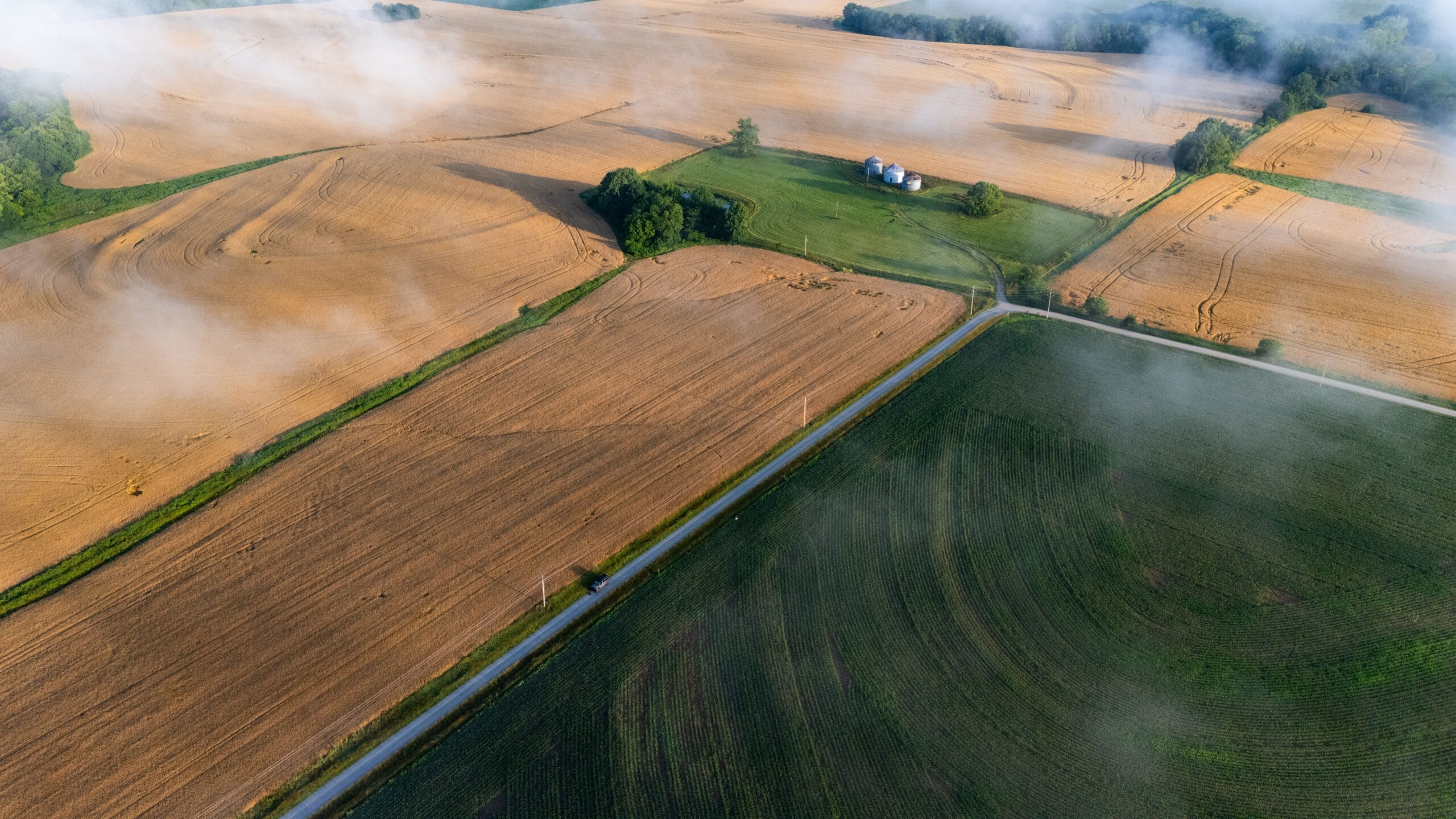
Picture an 80-acre tract in eastern Bossier Parish burdened by a servitude your grandfather reserved. Fifty acres fall inside a Haynesville unit; thirty cross the section line into a unit never drilled. A well on another owner’s forty inside the first unit pays you: at a one-fifth royalty, holding all the minerals under those fifty acres, your decimal is 50 ÷ 640 = 0.078125, times 0.20, or 0.015625. Outside, nothing has happened — ten years after that thirty acres last saw use it reverts to the landowner, while the checks keep arriving for the fifty.
Reading HA RA SU, cross-unit laterals and shut-in wells
Louisiana unit names look like license plates. “HA RA SU” plus a letter means Haynesville Zone, Reservoir A, Sand Unit — and the designation is reused in different fields, so a unit name without its field name tells you almost nothing. Bossier Parish holds old gas fields such as Elm Grove, where Cotton Valley sands produced for years above the Haynesville and horizontal permits are still being filed.
What has changed lately is the shape of the wells, not the units. Operators increasingly drill cross-unit laterals — one borehole serving as unit well for one unit and alternate unit well for the next — and the state took up Haynesville rules on longer laterals, cross-unit wells and setbacks in a 2025 rulemaking. The consequence is counterintuitive: the well saving your acreage may be a lateral drilled from a pad a mile away, and it still saves only the part of your tract inside the unit it was assigned to. Shut-in wells are their own trap: under Article 34 one interrupts prescription only if surface testing proved it capable of producing in paying quantities, and a shut-in royalty check is a lease payment, not production.
Mineral royalties run on the same clock and the same geometry. Article 85 extinguishes a royalty after ten years of nonuse, and Article 89 carries the unit rule straight across: if the unit well is on other land, the interruption “extends only to that portion of the tract included in the unit.”
What to pull in Benton, and what to pull on SONRIS
- Conveyance records at the Bossier Parish Clerk of Court, 204 Burt Boulevard in Benton, searchable through the Clerk’s online inquiry system. Pull the instrument that created the servitude, its exact legal description, and every later act touching it — including any acknowledgment by the landowner, which under Article 54 interrupts prescription but must be written and filed for registry to affect third parties.
- The unit order and plat on SONRIS, the state’s oil and gas database. The order gives the unit boundary and its designated well; the plat lets you lay your legal description over that boundary and count the acres inside. Expect records to lag corporate changes: Aethon’s Haynesville operations passed to Adamas Energy, a Mitsubishi subsidiary, on closing in July 2026, and BPX Energy is bp’s onshore operating name.
The analysis does not travel between parishes. A Red River Parish mineral rights interest sits over the deep Haynesville core, where section units blanket nearly everything and continuous production has kept the clock interrupted for over a decade. A Lincoln Parish mineral rights interest is the opposite case — east of the main fairway, under one percent of Louisiana’s gas output, development concentrated around Terryville field — so long quiet stretches are ordinary.

What a partly prescribed servitude is actually worth
Once the acreage splits, a buyer is pricing two assets that share a deed. Acreage inside a producing unit is a cash-flow asset, worth the discounted stream from a known decline curve. Haynesville wells decline hard — most of the recoverable gas comes out in the first few years, so a first-year rate is a poor guide to the twentieth. Buyers discount that stream for price and operator risk, then haircut it for what comes off before you see a dollar. Louisiana’s full gas severance rate is 15.14 cents per MCF for July 1, 2026 through June 30, 2027, and Act 284 of 2025 cut the horizontal gas exemption to eighteen months or payout for wells completed on or after July 1, 2025 — pulling severance tax into the highest-rate months of a well’s life. Price decks matter as much as geology: the EIA’s October 2026 Short-Term Energy Outlook projects Henry Hub averaging $3.48 per MMBtu in 2026 and $3.16 in 2027.
Acreage outside the unit is something else: undeveloped, speculative, carrying a live title question. A careful buyer will not pay full undeveloped value where the servitude may already have prescribed; a careless one finds out at closing. The rock is there — the USGS assessed 47.9 trillion cubic feet of undiscovered, technically recoverable Haynesville gas in its December 2025 fact sheet — but undrilled rock under a lapsed servitude belongs to the landowner.
When the answer is not to sell
Three cases where holding is usually better. If your acreage sits in a unit whose well is still in its steepest decline, you are selling the best years of the stream against the thinnest data; another eighteen to twenty-four months gives both sides a more reliable curve. If an operator has filed for a new unit or a cross-unit lateral taking in your outside acreage, that filing may be about to turn a prescription problem into a producing asset. And if the title question is genuinely open, resolving it first costs less than the discount a buyer applies to uncertainty. Where the clock has already run, say so plainly.
Getting an offer on a Bossier Parish interest
We buy producing and non-producing interests across north Louisiana, and we do the unit-boundary work ourselves rather than asking you to prove your acreage. For a number on a Bossier Parish mineral rights interest, send what you have — a deed, a check stub, a succession judgment, even a legal description — and we will tell you how your acres fall against the units before we talk price. The same applies anywhere we buy Louisiana mineral rights, or reach us through our contact page.
Sources: La. R.S. 31:27, 29, 33, 34, 36, 37, 54, 85, 89; Department of Conservation and Energy; SONRIS; Louisiana Department of Revenue Bulletin 26-013; Act 284 of 2025; USGS Fact Sheet 2025-3054; EIA Short-Term Energy Outlook, October 2026. Not legal or tax advice.
MINERAL RIGHTS & ROYALTIES
Ready to explore an offer for your mineral rights?
Tell us a little about your interest. Get a free, no-obligation review from Selling My Mineral Rights.