Shallow Oil, Deep Gas: What Caddo Parish, Louisiana Mineral Rights Are Worth
MINERAL RIGHTS & ROYALTIES
What could your mineral rights be worth?
Tell us a little about your interest. Get a free, no-obligation review from Selling My Mineral Rights.
A Caddo Parish family asked us why one company offered on all of their minerals north of Oil City, while a second, weeks later, wanted only the rights below 6,000 feet. Both offers were genuine. They were not offers on the same thing.
Caddo Parish is unusual even for north Louisiana. Two producing systems sit stacked in one rock column, separated by close to two miles of vertical distance and 120 years of history. What your minerals are worth depends almost entirely on which deck a buyer is underwriting — and on whether you still own both.
The Shallow Deck: Chalk Oil at 1,500 Feet, Producing Since 1905
The Caddo-Pine Island field was the first of Louisiana’s very large oil fields. The discovery well, drilled by Savage Bros. & Morrical as the No. 1 Offenhauser, came in on March 28, 1905, at 1,556 feet, and the field spread across the north of the parish around Caddo Lake. Much of its oil has come from shallow Upper Cretaceous horizons, notably the Nacatoch sand and the Annona Chalk, both within about 2,000 feet of the surface. (American Oil & Gas Historical Society; U.S. Geological Survey.)
What matters today is what is left. Most surviving Caddo-Pine Island wells are strippers — a few barrels a day, pumped by small operators, on a decline curve nearly flat for decades. That flatness is valuable: there is little left to decline. But volumes are small, revenue tracks the oil price one-for-one, and the operator behind the check is rarely a company with a balance sheet.
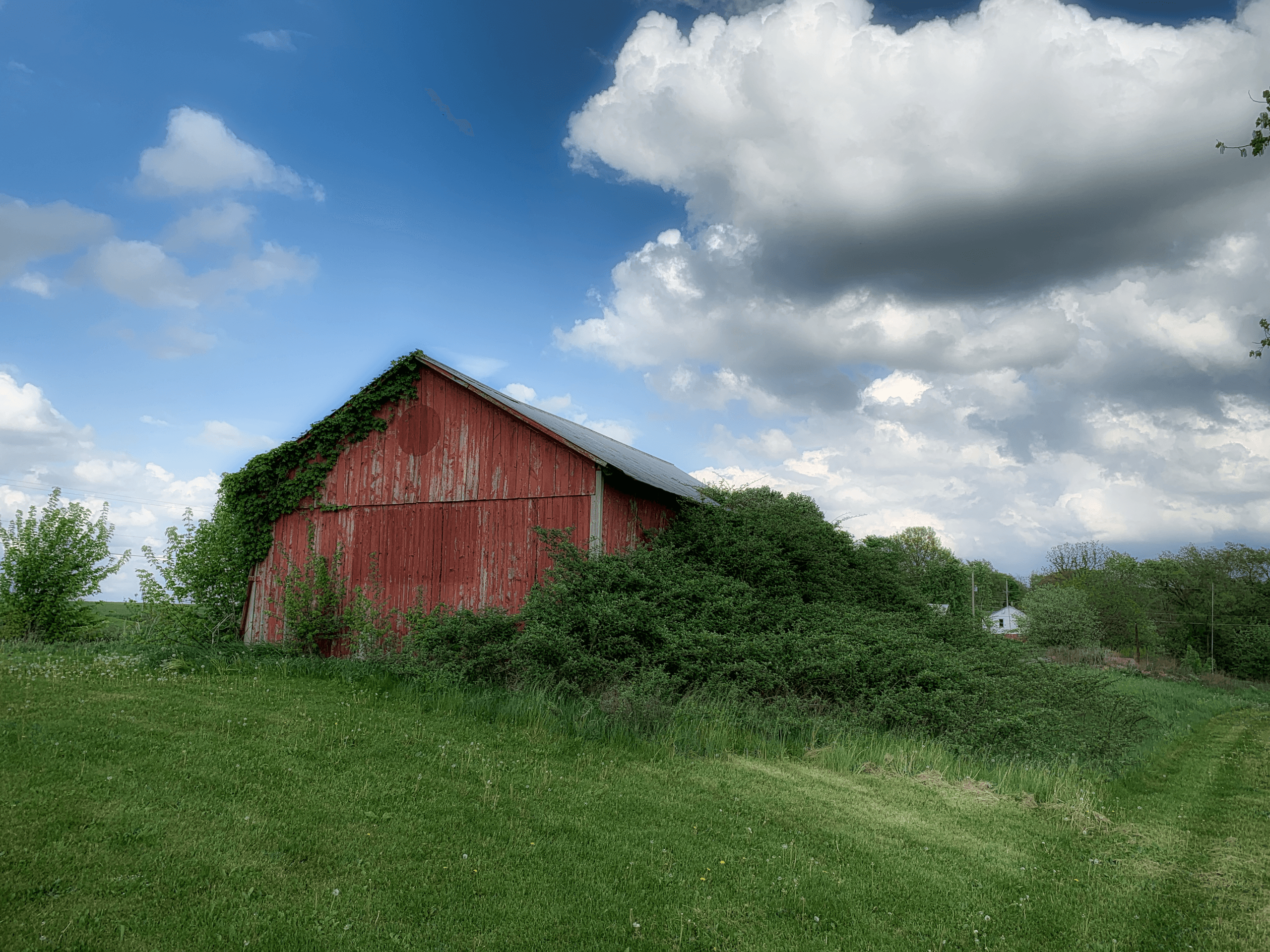
The Deep Deck: Haynesville Gas Two Miles Below the Same Ground
The Haynesville Shale sits at roughly 10,500 to 13,500 feet, one of the deepest producing shale plays in the Lower 48. It runs roughly 200 to 300 feet thick, with the Bossier shale and Cotton Valley Group above it and the Smackover below.
But Caddo Parish is not uniformly prospective. The Haynesville is dominantly shale and economically interesting across the south of the parish, nearer the DeSoto and Bossier lines; the far north — where Caddo-Pine Island sits — is off that fairway. Two 120-acre tracts can look identical on the tax roll and be worth entirely different money, because one has a second deck under it and the other does not.
Activity backs that up. Haynesville growth has concentrated in DeSoto, Caddo, Red River and Bossier parishes, with operators such as Aethon Energy and Comstock Resources active across the play. The EIA’s September 2026 outlook has Haynesville production growing about 9 percent in 2026, roughly 1.4 Bcf/d, with Henry Hub averaging $3.43 per MMBtu, a price at which these deeper, costlier wells still work (EIA).
Why One Caddo Tract Can Sit Under Two Different Leases
Because the two decks are developed by different companies with different economics, Caddo leases are often depth-limited — covering everything above the base of the Cotton Valley, say, and leaving the rest of the column open. That is contractual, not statutory: the mechanism is a vertical Pugh clause, releasing horizons below the deepest producing depth when the primary term ends.
Leases written here in the 1920s through the 1940s generally had no such clause, and when the Haynesville arrived some owners found a chalk well making four barrels a day had held their entire column for sixty years. Establish three things before you negotiate: what depths your lease covers, whether it has a vertical Pugh clause, and what is holding it.
A Stripper Well From 1938 May Be Doing Legal Work You Don’t Know About
Louisiana does not let mineral rights sit idle. Under La. R.S. 31:27 a mineral servitude is extinguished by prescription of nonuse for ten years, and R.S. 31:28 starts that clock the day it is created; a royalty prescribes the same way under R.S. 31:85. Use is measured by good-faith operations for the discovery and production of minerals (R.S. 31:29), and a servitude is one right in the minerals beneath the tract, not a stack of depth-limited rights — so a shallow well on the burdened land ordinarily keeps the whole servitude, deep rights included, alive.
The Code’s express carve-out is geographic, not vertical. Under La. R.S. 31:33, operations on other land forming part of a unit that takes in only part of your tract interrupt prescription only as to the portion inside that unit; the rest keeps running out. Where a family holds 300 acres with forty inside a Haynesville unit and an old chalk well across the road, that distinction decides what they still own.
This is title work, not arithmetic. The Caddo Parish Clerk of Court at 501 Texas Street, Room 103 in Shreveport holds conveyances indexed back to 1914 and scanned back to 1838, and a Louisiana mineral title attorney should be reading them. None of it binds the State: under Article IX, Section 4 of the Louisiana Constitution, state mineral interests are never lost by prescription — which is why the water bottoms of Caddo Lake and the Red River sit outside the analysis.
Caddo Has More Orphan Wells Than Any Other Parish in Louisiana
Caddo Parish had 1,331 orphan wells on the state’s May 2026 list, the highest count of any parish in the state, and a direct legacy of drilling that began in 1905 and never entirely stopped. Louisiana is deploying federal infrastructure funding to plug them, and Caddo wells dominate the state’s recent plugging review lists (Louisiana Department of Conservation and Energy).
Plugging obligations run to operators and working interest owners under the state’s conservation rules, now administered by the Department of Conservation and Energy, not to a non-participating royalty owner. But the wells still reach your transaction: they slow title diligence, and they make a careful buyer discount shallow production for the risk that a small operator walks away and the income stops. That risk is in any bid, discussed or not.
The Two Decks Are Priced by Two Different Calculations
A shallow Caddo-Pine Island royalty is valued off a long, nearly flat decline curve. Three inputs carry almost all of it: barrels a month you are paid on, the oil price the buyer runs, and the discount rate they apply. Buyers of producing non-operated interests generally sit in the low-to-mid teens on discount rate, moving to 15 to 25 percent for non-producing interests where drilling and timing risk enter. Long life pulls the number up; small volumes and operator risk pull it down. Shallow Caddo royalties therefore get quoted as a multiple of current income, not a per-acre figure.
Deep rights price per acre instead. What drives that number:
- Whether your net mineral acres sit inside a producing Haynesville unit, or only near one.
- How many undrilled locations remain, in the Haynesville and the Bossier shale above it.
- Who the operator is, and how fast they convert permits into producing wells.
- The forward gas strip, not the spot price the day you get the call.
- Whether the deep rights are leased at all, and at what royalty fraction.
Severance tax sits underneath both calculations, and 2025 changed it. Louisiana resets the gas rate each July: 10.52 cents per MCF for July 2025 through June 2026, rising to 15.14 cents from July 1, 2026 (Louisiana Department of Revenue). Act 284 of 2025 shortened the horizontal-well exemption for new gas wells from 24 months to 18 and left horizontal oil at 24 months or payout, and Act 295 cut the oil rate from 12.5 to 6.5 percent, but only for wells completed on or after July 1, 2025; older Caddo-Pine Island wells stay at 12.5 percent unless they qualify for the reduced stripper or incapable-well rates. Royalty owners bear their share, so these are line items on your check.
When Selling Caddo Minerals Is the Wrong Move
If a well has been permitted or spudded in a unit taking in your acreage but has not reached first sales, you are being asked to sell the most valuable part of the interest — the step-up from non-producing to producing — just before it happens. Wait for the completion report.
If your only income is a shallow stripper royalty and you do not need the cash, holding costs very little. If the interest came through a succession that was never completed, fix the title first: the discount for curing undivided heirs’ interests usually exceeds the cost of curing them yourself.
And a partial sale is on the table more often than owners realize: selling the shallow rights and keeping the deep — or the reverse — is a normal transaction here, precisely because the two decks were never one asset.
Getting a Real Number on Your Caddo Parish Interest
Any serious offer here should say which deck it is buying, and what it assumes about your net mineral acres and depths. We buy mineral rights and royalty interests across north Louisiana for cash, shallow and deep. See what we look at on our Caddo Parish mineral rights page, or get in touch with a royalty statement, a lease, an old mineral deed, or just the legal description. We will tell you which deck you own before we talk price. Owners further south rarely face the same question: a DeSoto Parish mineral rights interest is a deep Haynesville asset and nothing else. If you own minerals elsewhere in Louisiana, see how to sell Louisiana mineral rights.
MINERAL RIGHTS & ROYALTIES
Ready to explore an offer for your mineral rights?
Tell us a little about your interest. Get a free, no-obligation review from Selling My Mineral Rights.