

Why the Appraisal District’s Number Isn’t Your Offer: Howard County, Texas Minerals
MINERAL RIGHTS & ROYALTIES
What could your mineral rights be worth?
Tell us a little about your interest. Get a free, no-obligation review from Selling My Mineral Rights.
Every January, two different organizations put a value on the same Howard County, Texas mineral interest. One mails you a tax bill. The other, sooner or later, mails you an offer. The numbers rarely match, and owners who assume the appraisal district has done the valuation work for them make one of two mistakes: they treat the tax roll as a ceiling and sell too cheaply, or they treat it as an appraisal and refuse a fair offer. Neither number is wrong. They are built from different inputs to answer different questions, and once you can see how each is assembled, the gap between them stops being confusing and starts being useful.
What Is Actually Under Howard County
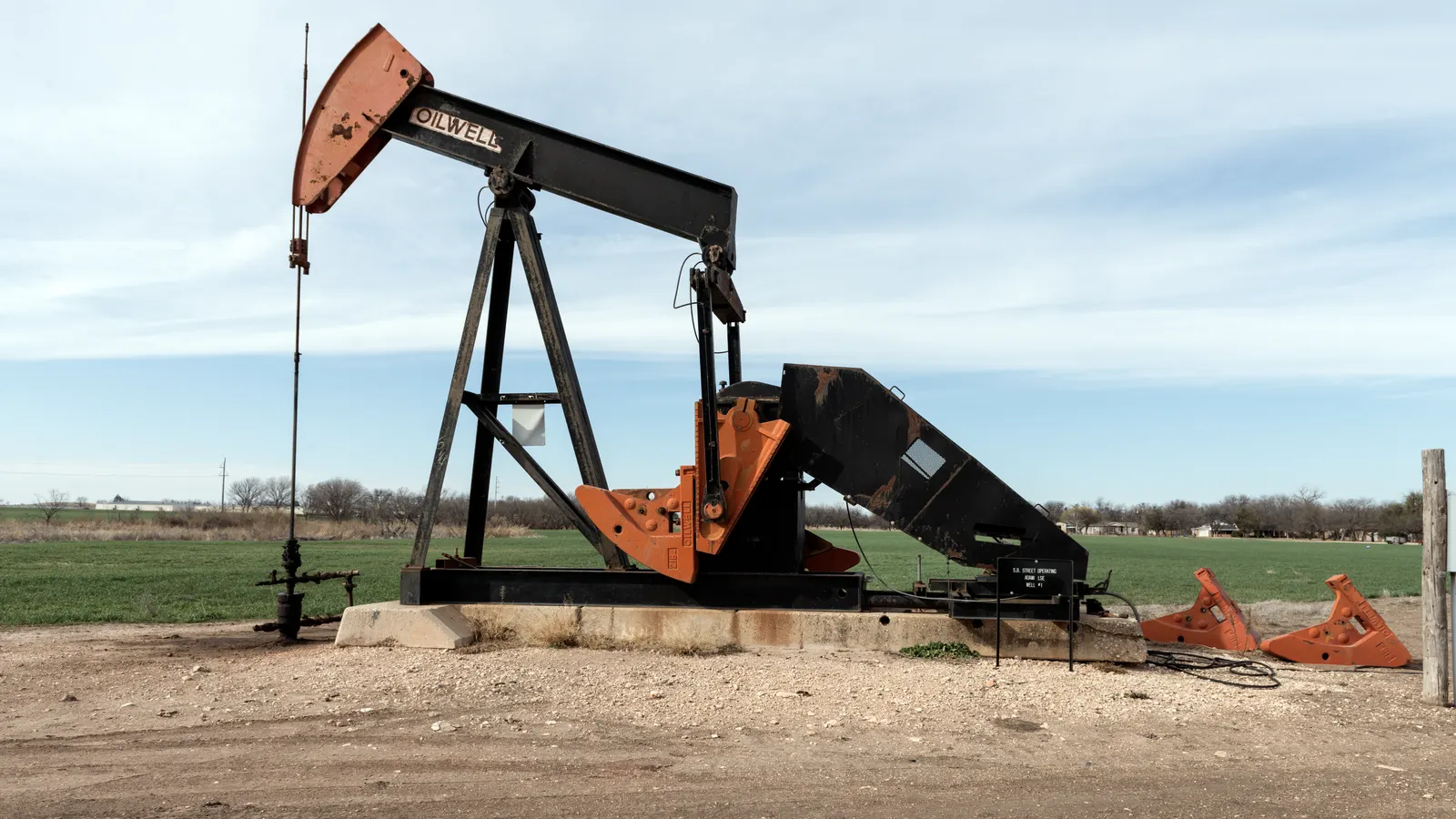
Howard County sits on the eastern side of the Midland Basin, with Big Spring at its center. It is not the biggest oil county in Texas, but it is firmly in the top ten: the Railroad Commission’s preliminary October 2025 figures put Howard eighth in the state at 5,336,091 barrels of crude for the month, behind neighboring Martin County at 19.9 million barrels and Midland County at 18.1 million.
Development is horizontal and stacked. Operators have redeveloped the Lower Spraberry and Wolfcamp A across much of the county, with additional results in the Middle Spraberry, the Jo Mill, the Wolfcamp B and the Wolfcamp D. HighPeak Energy’s acreage is concentrated at Flat Top north of Big Spring and Signal Peak to the south; elsewhere the Railroad Commission records show Occidental’s OxyRock Operating, Surge Operating, SM Energy, Diamondback E&P, Vital Energy (now part of Crescent Energy) and Birch Operations. That stack matters to what follows, because the difference between the tax number and the market number is mostly a question of which benches have already been drilled.
How the Appraisal District Builds Its Number
Texas is unusual in taxing producing mineral interests as real property. The Howard Central Appraisal District in Big Spring carries your royalty interest as its own account, separate from the operator’s working interest and from whoever owns the surface. Each interest in each producing unit gets its own bill.
The method is set by statute, not by local discretion. Tax Code section 23.175 governs the income method districts use: it starts with the average price actually received for that interest’s oil or gas in the preceding calendar year, then multiplies it by a price adjustment factor derived from EIA projections for WTI or Henry Hub. For years two through six of the forecast, the statute caps how fast the price may be escalated or de-escalated, tying it to the long-run average change in the producer price index since 1982. The discounting itself follows the Comptroller’s Manual for Discounting Oil and Gas Income, adopted by reference in Comptroller Rule 9.4031, which sets out the discounted cash flow equation and the accepted techniques for arriving at a discount rate. The appraiser does not get to pick a rate out of the air, and neither do you.
Three consequences follow. The valuation date is January 1, so it is a snapshot. The price input is backward-looking, so the tax roll runs hot in a year crude fell and cold in a year it rose. And because it starts from what a well actually produced, it can only value wells already producing.
The Gap Is Mostly Undrilled Rock
That last point is where the two numbers part company. In practice, Texas appraisal districts assign no value to a mineral interest with no completed well on it, because proving a value above zero is a hurdle they have no reason to clear. Your undeveloped Wolfcamp B and Jo Mill rights are, to the tax roll, worth nothing.
A buyer sees it differently. Where operators are working through a stack of benches, the undrilled locations under your tract can be worth as much as the producing wells on it. A buyer underwrites the cash flow you have plus a probability-weighted view of the cash flow you do not have yet: how many benches are prospective under your section, who holds the acreage, how many rigs that operator runs, and how long you would wait. None of that appears in the appraisal district’s arithmetic.
So the tax value behaves less like a market value and more like a floor on the developed portion of your interest, priced with last year’s numbers. It will understate a lightly developed tract in a well-stacked part of the county, and can overstate a fully developed one in a year when prices have since fallen.
Reading the Bill, and the Dates That Bind You
Four provisions catch out Howard County owners, particularly heirs living elsewhere.
- Small interests may be exempt. Under Tax Code section 11.146, a mineral interest with a taxable value under 500 dollars is exempt — but all of your mineral interests within a single taxing unit are aggregated first, so several small ones can cross the line together.
- The lien does not wait for the bill. Under section 32.01, a tax lien attaches to the property on January 1 each year and is perfected on attachment, with no further action by the taxing unit.
- Taxes are delinquent if not paid before February 1 of the following year. Unpaid mineral taxes accrue penalties and can eventually be collected against the interest itself, which is how absentee heirs occasionally lose a royalty that was quietly paying.
- The protest window is short. Section 41.44 requires written notice to the appraisal review board by May 15, or the thirtieth day after your notice of appraised value was delivered, whichever is later.
A protest is worth considering when the district’s decline assumption looks optimistic against your check history, or when the prior-year price plainly overstates what your barrels fetched. Pull twelve months of statements first; if the line items are unfamiliar, our guide to reading a royalty statement covers them.
What a Buyer Is Underwriting Instead
An offer is built from the bottom up. It starts with net royalty acres rather than gross acres — your undivided mineral share multiplied by your royalty fraction, normalized to a one-eighth basis — because that is the only unit in which two tracts compare. It then applies a decline curve to each producing well rather than a flat forecast: Midland Basin horizontals fall steeply over the first eighteen to twenty-four months before flattening into a long shallow tail, so a well’s first-year check is a poor guide to its lifetime value.
From gross revenue the buyer deducts what you actually lose: Texas severance tax at 4.6 percent on oil and 7.5 percent on gas, any post-production deductions your lease permits, and the ad valorem tax this article is about. The remainder is discounted at a rate reflecting commodity risk, operator quality and how long undeveloped locations might sit. As a sanity check rather than a method, producing royalty in mature Permian counties has commonly changed hands somewhere around four to six years of recent royalty income — the upper end for interests under an active rig line, the lower end for thinly developed or single-bench acreage. Where a particular Howard County tract falls in that band depends on which benches are proved under it, your decimal, and the operator’s near-term plans, which is why a credible offer follows someone looking at your specific sections rather than preceding it.

When the Gap Argues for Holding
If your tax valuation is small because only one or two benches have been drilled, and you can see permits or rig activity moving toward your sections, the gap between tax roll and market value is precisely what you would be selling. That is the situation in which waiting can pay: each new completion converts undrilled rock into producing cash flow and lifts both numbers at once.
The case for selling is usually different in character: a fractional interest split three ways among siblings that yields a few hundred dollars a year plus a tax bill and a division order every time an operator changes; an estate that needs a clean number; a tract whose benches are largely developed, where most of the remaining value is a long shallow decline you could take today as a lump sum. None of those are about timing the oil price. They are about whether the asset still fits the owner.
Where to Start
Gather three things first: your most recent notice of appraised value from Howard CAD, twelve months of royalty statements, and the deed or probate document that put the interest in your name — recorded with the Howard County Clerk in Big Spring if the chain runs through Texas. Together they tell you what the county thinks you own, what it actually pays, and whether title is clean enough to transfer.
If you want a figure to set against your tax valuation, we buy minerals and royalties in Howard County, Texas and across the Texas Permian Basin for cash, and we will explain how we got to the number. Send your details through the Howard County page above, read how to sell Texas mineral rights statewide, or contact us directly. There is no obligation, and if the honest answer is to keep them a while longer, we will say so.
MINERAL RIGHTS & ROYALTIES
Ready to explore an offer for your mineral rights?
Tell us a little about your interest. Get a free, no-obligation review from Selling My Mineral Rights.

