What’s Left in the Stack: Valuing Midland County, Texas Mineral Rights
MINERAL RIGHTS & ROYALTIES
What could your mineral rights be worth?
Tell us a little about your interest. Get a free, no-obligation review from Selling My Mineral Rights.
Most Midland County royalty owners ask the same question in the same way: “I get about this much a month — what is that worth?” It is a reasonable question, and in a shallow conventional field it would be the right one. In Midland County it is close to the wrong one, because your current check is produced by a fraction of the rock you own.
Under most of this county there is more than 2,500 feet of stacked pay, and what a buyer is really pricing is not the well paying you today. It is the wells that have not been drilled yet, and how much they will be worth when they are. Here is how that count is actually done.
Over 2,500 feet of pay, and why that is the whole story
The Midland Basin section runs from the Lower Wolfcamp up through the Upper Spraberry, and it is not one reservoir but a stack of them. The Spraberry alone divides into the Upper Spraberry, Middle Spraberry, Jo Mill and Lower Spraberry. Below it sit the Dean and then the Wolfcamp, which splits into the A, B, C and D members — and because the C and D are each commonly split into upper and lower halves, operators talk about roughly six separate Wolfcamp landing targets.
Some of these intervals are old news. The Upper Spraberry, Jo Mill and Dean are coarse-grained siltstones laid down as turbidites, and vertical wells have produced them across the basin for decades. The Spraberry Trend was discovered in January 1949, and the Railroad Commission combined a scatter of smaller fields into the Spraberry Trend pool in 1953 — about half a million acres clustered around the common corners of Midland, Reagan, Upton and Glasscock counties.
That history matters to your valuation in a specific way. A tract with a seventy-year-old vertical Spraberry well on it is not a depleted tract. The vertical well drained a thin slice. The horizontal benches beneath and around it are, for valuation purposes, still in inventory.
Why your current check is the wrong starting point
When a buyer underwrites a Midland County royalty, the monthly cheque sets a floor, not a price. The work is in the column next to it: how many undrilled locations are attributable to your tract, in which benches, how good those benches are in your particular township, and how many years out they are likely to be drilled.
That last factor does more damage than owners expect. A location that will be drilled next year is worth most of its undiscounted value. The same location drilled in year eight, discounted at the rates buyers actually use, is worth a fraction of it — and a location in a bench nobody has yet proven in your area may be worth almost nothing today, however real the rock is. Two neighbouring tracts in Martin County with identical acreage and identical royalty can be worth very different sums purely because one sits inside an operator’s next three-year programme and the other does not.
Net royalty acres: the unit buyers actually bid in
Offers in the Permian are quoted per net royalty acre, not per acre and not as a multiple of your cheque, and the conversion trips people up. A net royalty acre normalises your interest to a 1/8 royalty so that tracts with different lease terms can be compared on one yardstick:
- Net royalty acres = net mineral acres × (your royalty rate ÷ 1/8)
- 40 net mineral acres leased at 1/8 is 40 net royalty acres.
- The same 40 acres leased at 1/4 is 80 net royalty acres — the same dirt, twice the royalty, twice the NRA.
- An unleased 40 acres has no fixed NRA until you know what royalty it would command.
So when someone quotes you a figure “per acre,” establish immediately whether they mean gross acres, net mineral acres or net royalty acres. The three numbers can differ by a factor of five on the same tract, and the ambiguity is not always accidental. The National Association of Royalty Owners covers the arithmetic in plain terms.
The discount nobody volunteers: parent wells and child wells
Here is the part of the inventory story that rarely makes it into an offer letter. The first well into a bench — the parent — drains pressure from the rock around it. Wells drilled later into that depleted rock, the children, do not perform like the parent did, and in the Midland Basin this has been measured rather than guessed.
Published work on Midland Basin child-well performance found that wells spaced about 1,320 feet from a parent gave up roughly 5 percent of five-year cumulative oil, while wells at 660-foot spacing gave up around 24 percent. Child wells landed below a parent generally degrade more than those landed above, and measurable interference often reaches beyond 1,000 feet.
Translate that into your position. If the good benches under your tract are already drilled on tight spacing, the remaining locations are child locations, and they should not be valued at parent-well economics. If your section has only one or two penetrations in the best bench, the inventory behind you is worth considerably more. This is the single largest source of honest disagreement between a seller’s expectation and a buyer’s number, and it is worth asking any buyer directly how many remaining locations they have assumed and at what spacing.
What Texas takes before you are paid
Texas is a light-touch state on severance compared with Colorado or North Dakota, and the rates are simple. The Comptroller collects 4.6 percent of the market value of oil and 7.5 percent on natural gas. Your share comes out of your royalty before the cheque is cut, and it appears as a deduction line on the statement.
Texas has no state income tax on the royalty either, which is part of why Permian minerals trade at firmer multiples than equivalent cash flow in several other states. What Texas does not have is a dormant mineral statute: your interest does not lapse through non-use the way it can in Ohio or North Dakota. Unused Midland County minerals stay yours, which is why so many interests here are now split among dozens of distant heirs.
The pooling gap under the Spraberry
Texas is unusual among major producing states in having almost no workable forced pooling. The Mineral Interest Pooling Act, Chapter 102 of the Natural Resources Code, is the only statute that lets one mineral owner force another into a unit — and it applies only to fields discovered and produced after 8 March 1961.
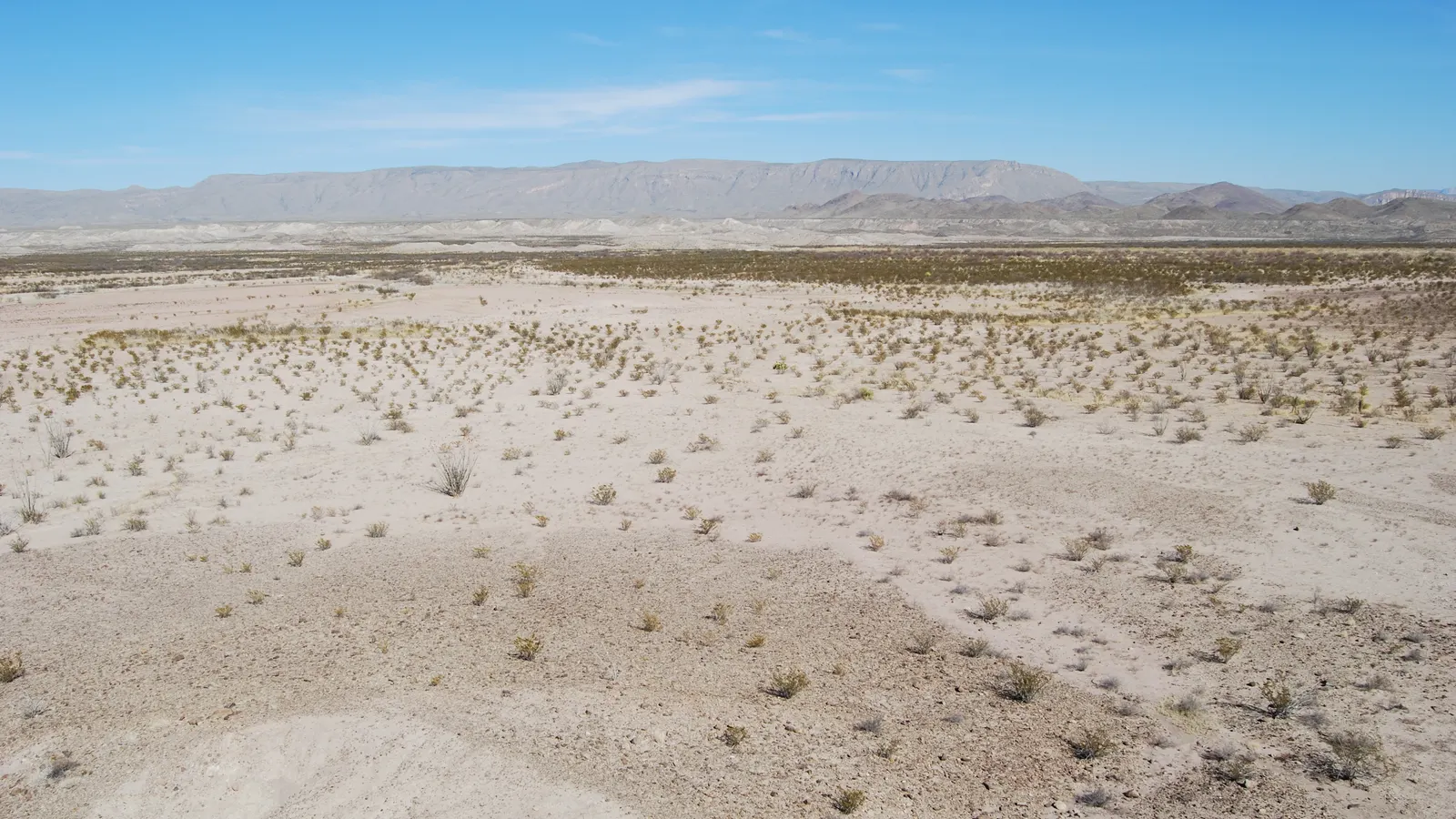
The Spraberry Trend was discovered in 1949. It sits outside the Act. In practice that means a Midland County operator cannot compel an unleased owner into a Spraberry unit by statute, and an unleased owner cannot compel the operator to include them either. Everything runs on negotiation, and the Railroad Commission rarely sees a contested pooling application through to a final order. If you are unleased in a developing section, that is leverage — but it is leverage with a clock on it, because the operator can usually design a lateral around you.
Getting paid: the 120-day rule and division orders
Texas sets payment deadlines in section 91.402 of the Natural Resources Code. First payment is due within 120 days after the end of the month of first sale. After that, oil proceeds are due within 60 days and gas proceeds within 90 days of the end of the month of sale. Two practical caveats sit underneath that: the payor may require a signed division order containing only the statutory provisions before paying, and amounts under $100 can be held back until the balance reaches $100 or twelve months’ proceeds accumulate.
That last rule explains most “my cheque stopped” calls we get from small interests in Howard and Martin counties. The money is usually accruing rather than missing. The Railroad Commission’s royalties FAQ is a sensible first stop, though the Commission does not adjudicate private royalty disputes.
What to establish before you take an offer
Operator consolidation has changed who you are dealing with: ExxonMobil absorbed Pioneer Natural Resources in 2024 and Diamondback absorbed Endeavor Energy Resources the same year, which means two of the largest Midland Basin position-holders are now inside much larger companies, alongside Chevron and Apache. Pay decks and development schedules have been reshuffled accordingly. Before you respond to any offer, pin down four things:
- Your net mineral acres and your net royalty acres, taken from the recorded instruments rather than from an offer letter.
- Which benches under your tract are already developed, and at what spacing.
- Whether your sections sit in a current operator programme or in undated inventory.
- A normalised twelve-month net figure from your statements, after severance and post-production deductions.
Midland County deed records are held by the County Clerk at the courthouse on North Loraine Street in Midland, and well and permit records are public through the Railroad Commission. If your tract is in the Delaware Basin rather than the Midland Basin — Loving or Reeves, say — the bench stack and the economics are different enough that our note on allocation wells and the Waha discount is the better starting point.
When you have those four numbers, an offer becomes something you can test rather than something you have to trust. You can request a valuation on our Midland County mineral rights page, see every county we cover on the Texas mineral rights hub, or contact us directly. If the right answer is to hold and wait for the next bench, we will say so.
MINERAL RIGHTS & ROYALTIES
Ready to explore an offer for your mineral rights?
Tell us a little about your interest. Get a free, no-obligation review from Selling My Mineral Rights.