One-Half of One-Eighth: What Old Deeds Mean for Loving County, Texas Minerals
MINERAL RIGHTS & ROYALTIES
What could your mineral rights be worth?
Tell us a little about your interest. Get a free, no-obligation review from Selling My Mineral Rights.
Somewhere in a filing cabinet far from West Texas there is a photocopy of a Loving County deed from the 1930s, and on it is a phrase like “one-half of one-eighth of all oil, gas and other minerals.” The person who inherited it wants to know what that fraction pays today. It may mean 1/16, or it may mean half of whatever the current lease pays — and in the Delaware Basin that gap is the difference between a modest check and a serious one.
A county of 100 people and 103,653 mineral accounts
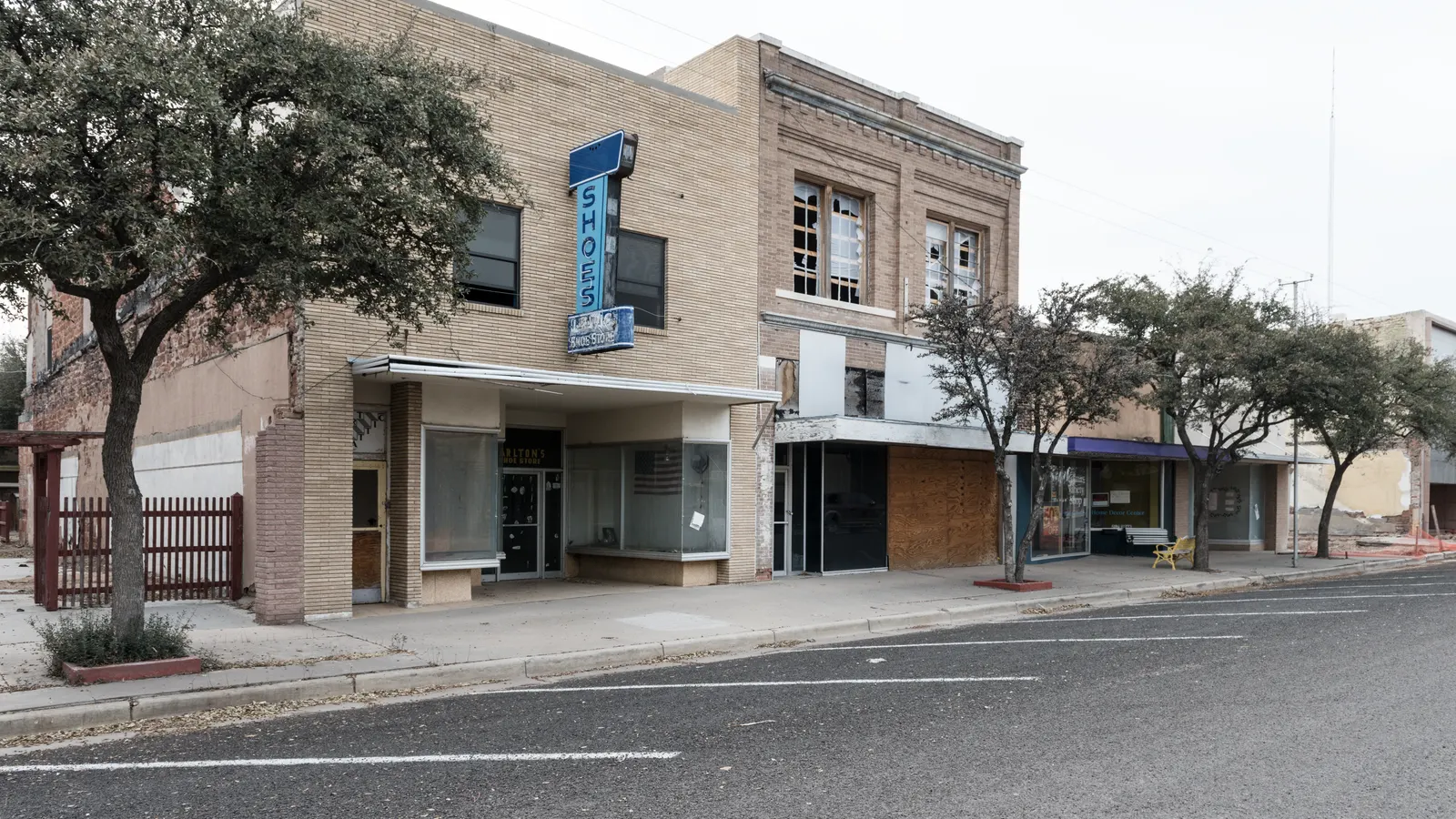
Loving County is 671 square miles of flat desert with Mentone as its only town and a population the Texas Almanac has put under 100. Its 2026 mass appraisal report tells the real story: the appraisal district carries 103,653 mineral accounts against 2,818 real property accounts. The surface is nearly empty. The mineral estate beneath it has been divided, inherited and re-divided for a century.
Those slivers sit on one of the most productive rock columns in North America. In the Railroad Commission’s June 2026 figures, Loving ranked fourth in Texas for crude oil at 7,856,009 barrels, second for condensate at 4,908,014 barrels, and sixth for total gas at 54,730,364 Mcf. When an estate that fractured meets production that large, the question of what fraction you own stops being academic.
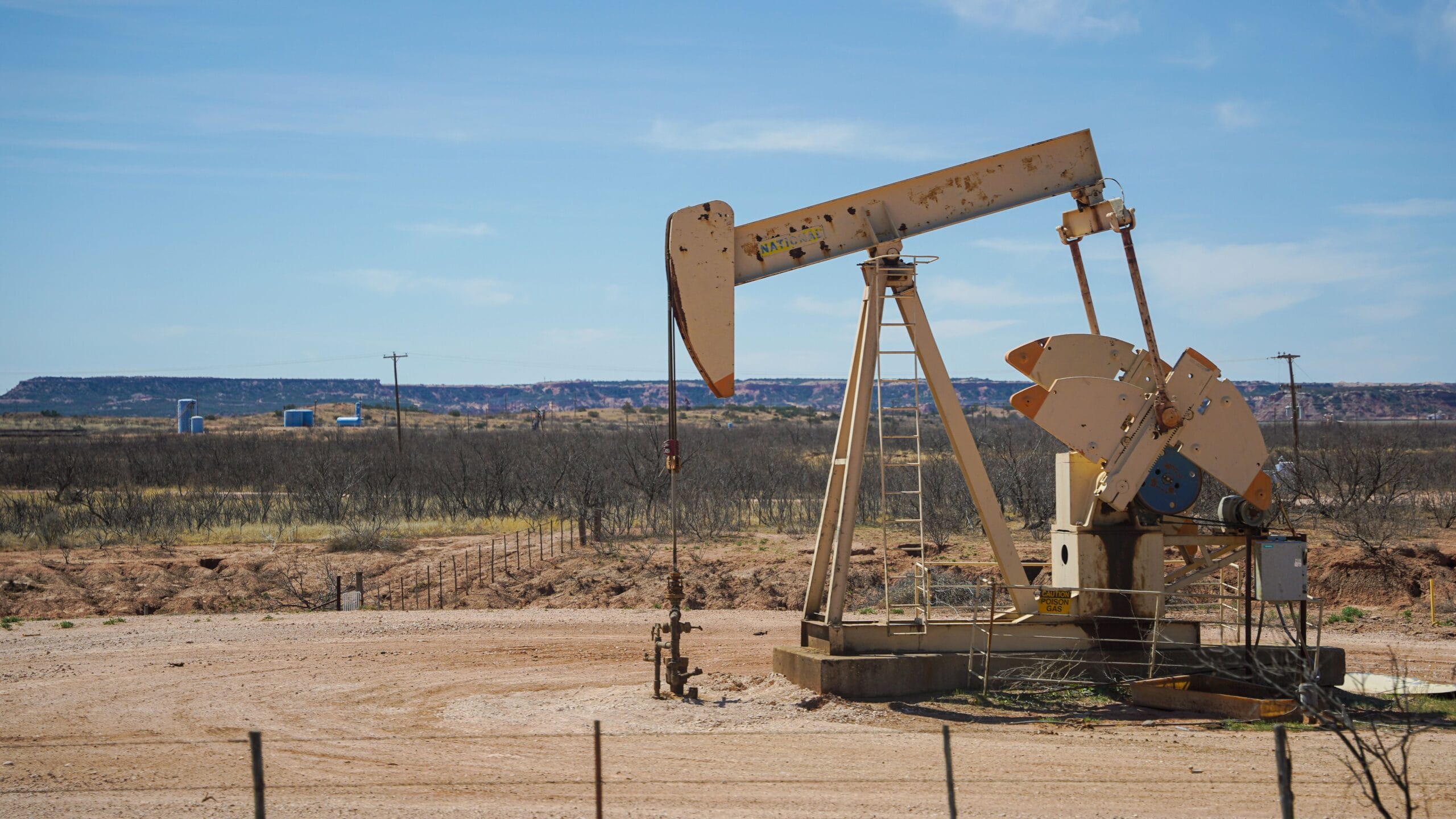
The deeds were written when one-eighth was the only royalty anyone had seen
Commercial production in Loving County began on September 1, 1925, with the Pecos Valley Petroleum Company’s Wheat No. 1, which opened the Wheat field. The Texas and Pacific Railway had been the county’s largest landowner from 1915 to 1920, holding 145 sections, and the ranch conveyances that followed through the 1920s, 1930s and 1940s are where most of today’s royalty fractions were created.
That timing matters. In that era a landowner’s royalty was one-eighth — not usually, essentially always. A seller who wanted to keep half the royalty wrote “one-half of one-eighth,” because 1/8 was simply the word for royalty. Nobody drafting in 1934 imagined a 1/5 lease, let alone a two-mile lateral through the Wolfcamp.
What the Texas Supreme Court decided those old fractions mean
In Hysaw v. Dawkins, 483 S.W.3d 1 (Tex. 2016), a 1947 will left children “one-third of one-eighth” of the royalty. The court refused to simply multiply. Reading the instrument as a whole, it held the children took a floating one-third of the royalty, not a fixed 1/24.
Seven years later, Van Dyke v. The Navigator Group, 668 S.W.3d 353 (Tex. 2023), went further. A 1924 deed reserved “one-half of one-eighth of all minerals.” The trial court and the court of appeals both read it as 1/16. The Supreme Court reversed, held it reserved one half of the mineral estate, and announced a rule: in antiquated instruments, a “1/8” inside a double fraction is presumed to be a term of art for the whole mineral estate rather than an arithmetic operand. The presumption is rebuttable, but the starting point has flipped.
Two things follow. A 1931 deed and a 1991 deed with identical words are not read alike, and the rest of the document still controls, because the presumption yields to contrary text. A division order settles nothing: it reflects whatever a title opinion concluded.
Mineral interest or non-participating royalty? They sell differently
The second question those deeds raise is what kind of interest was carved out. A mineral interest carries the executive right to lease, the bonus, delay rentals and the royalty. A non-participating royalty interest, or NPRI, carries the royalty and nothing else: no bonus, no signature on the lease, no vote.
That collides with how Loving County is actually drilled. Texas has no practical forced pooling. The Mineral Interest Pooling Act (Natural Resources Code ch. 102) reaches only reservoirs discovered and produced after March 8, 1961, the Railroad Commission cannot start a case on its own motion, and it must dismiss an application unless a fair and reasonable voluntary pooling offer came first. Pooling authority therefore comes from the lease — and an NPRI owner never signed one.
Under Montgomery v. Rittersbacher, 424 S.W.2d 210 (Tex. 1968), the executive cannot enlarge or diminish a pre-existing NPRI by pooling it. The owner chooses: ratify and share across the whole unit, or stand outside it and claim royalty on production from their own tract. When the well is a two-mile lateral crossing four tracts, those are very different numbers. Owners under the allocation and production-sharing wells common in Reeves County mineral rights face the identical question one county south, which is why a ratification letter is worth reading slowly.
Do the arithmetic before you talk about price
Take an owner whose family reserved “one-half of one-eighth” of the royalty under a tract contributing 80 net mineral acres to a 640-acre unit, and assume the operator’s lease carries a 1/5 royalty.
- Fixed reading (1/16 of production): 80 ÷ 640 = 0.125 tract participation, times 0.0625, gives a decimal of 0.0078125.
- Floating reading (half the lease royalty): half of 0.20 is 0.10; 0.125 times 0.10 gives 0.0125.
- The floating reading is exactly 1.6 times the fixed one — 60 percent more revenue, forever, from the same acreage.
As an illustration, on a unit generating $2 million of royalty-bearing revenue in a month, those decimals pay $15,625 and $25,000 — a gap of $9,375 before taxes and deductions. Texas then takes 4.6 percent of oil value and 7.5 percent of gas value in severance tax, and the appraisal district taxes the producing interest, its mineral accounts appraised under contract by Pritchard & Abbott. Tax Code 11.146 exempts an interest appraised below $500 per taxing unit, which is why the smallest heirs’ accounts often generate no bill.
County totals tell you nothing about your check
In that same June 2026 report, Upton County produced 7,863,391 barrels of crude to Loving’s 7,856,009 — about a tenth of one percent apart. Yet two owners with nominally similar acreage in the two counties can receive checks differing several times over, because a royalty decimal is net mineral acres divided by unit acres, times the lease royalty, times your fraction of it. The county total never enters it. Comparing Upton County mineral rights with Delaware Basin acreage really means comparing unit geometry and deed language.
Check-stub names mislead the same way. Loving County’s largest operator by filings is still listed as Anadarko E&P Onshore LLC, which has belonged to Occidental since 2019; WPX Energy Permian is Devon; COG Operating is ConocoPhillips. The entity on your stub says little about who makes drilling decisions now.
What a buyer does with an ambiguous fraction
Anyone making a serious offer runs title first. When the fraction is contestable, a buyer will price the conservative reading, carve the disputed portion out of the purchase, or hold part of the price back until curative instruments are recorded. None of that is bad faith, but all of it transfers the uncertainty to you as a lower number.
So sequence matters. If the operator already pays the floating decimal, you are selling a settled interest and should be paid for one. If it pays the fixed reading and you believe the deed floats, clearing that up first — a stipulation of interest, a correction instrument, a ratification, or a title opinion from a Texas oil and gas attorney — is usually worth more than haggling over price. Offers on producing royalties are quoted as a multiple of recent monthly net revenue, and that multiple is not evidence that the decimal beneath it is right.
There is also a timing argument for not selling. A new Delaware Basin well’s first twelve to twenty-four months are its steepest, so a check from that window is not a sustainable rate. With undrilled benches and an operator with a visible permit history, waiting is a real option.
Where the paper actually lives
The Loving County Clerk in Mentone — an office so small the same official also serves as district clerk — holds the deeds, leases, affidavits of heirship and probate records that decide all of this. The appraisal district, at PO Box 352 in Mentone, keeps the mineral accounts: a cross-check on what the taxing authorities think you own, but not title. Railroad Commission records tie a unit’s volumes to your decimal. Read together, those three will usually tell you whether your fraction is fixed, floating or genuinely in doubt.
Getting an offer on a Loving County interest
We buy producing and non-producing interests across the Delaware and Midland Basins, fractional and disputed ones included. For a cash offer on Loving County mineral rights, or to sell Texas mineral rights elsewhere in the state, send us a deed, a check stub or a legal description, or contact us directly. We will tell you what we think the fraction is before we tell you what it is worth.
Sources: Railroad Commission of Texas, Texas Oil and Gas Production Statistics for June 2026; Loving County Appraisal District 2026 mass appraisal report; Texas State Historical Association, Handbook of Texas: Loving County; Texas Comptroller, natural gas production tax; Texas Tax Code ch. 11. General information about Texas mineral and royalty interests, not legal or tax advice.
MINERAL RIGHTS & ROYALTIES
Ready to explore an offer for your mineral rights?
Tell us a little about your interest. Get a free, no-obligation review from Selling My Mineral Rights.